Arts for Equity Exhibition
COME JOIN US AT OUR RECEPTION PARTY ON FEBRUARY 28TH, 6-8pm AT 235 WATER ST.
Artworks
-
- Aidan Payne
-
- Aldo Cinco
-
- Anastasia Tiller
-
- Anne Cortez
-
- Brian Amadi
-
- Echo Henoche
-
- Emily Andrea Best
-
- Ernest Boateng
-
- Gaayathri Sukantha Murugan
-
- Ginok Song
-
- Hadiza Bello
-
- Ismael Gomezcana Cuevas
-
- Jennie Williams
-
- Jessica Brown
-
- Jessica Winters
-
- Leah Osmond
-
- Linh Pham
-
- Megan Samms
-
- Mavis Penney
-
- Mavis Penney
-
- Melissa Samms
-
- Melissa Samms
-
- Nikita Sachdeva
-
- Nasim Makaremi Nia
-
- Pete Barrett
-
- Quazi M. Abrar
-
- Regan Edmunds
-
- Shania Sanderson
-
- Tooktoshina Creations
-
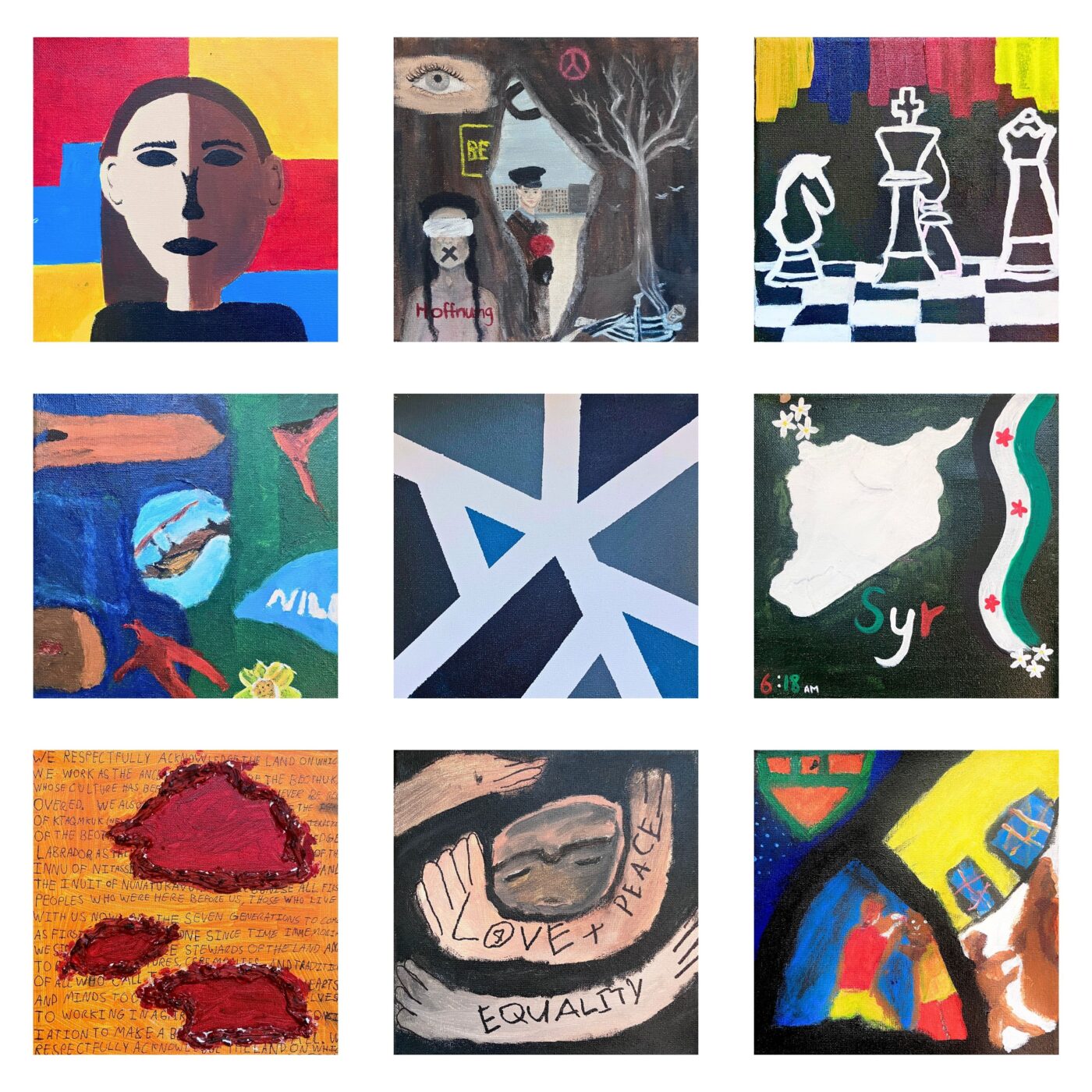
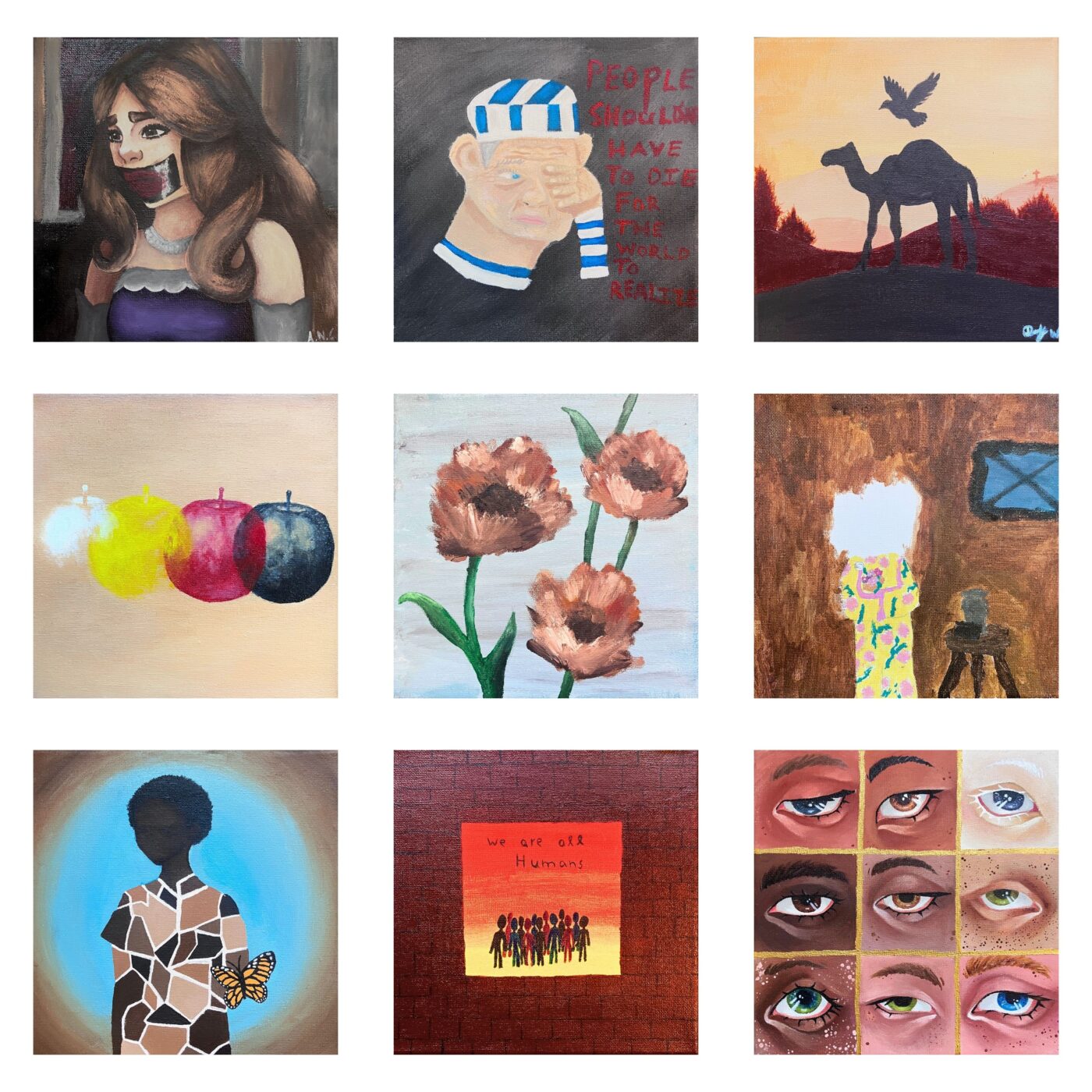
- Holy Heart Visual Arts Students
-
- Holy Heart Visual Arts Students
-
- Holy Heart Visual Arts Students
PARTICIPATING ARTISTS:
Aidan Payne
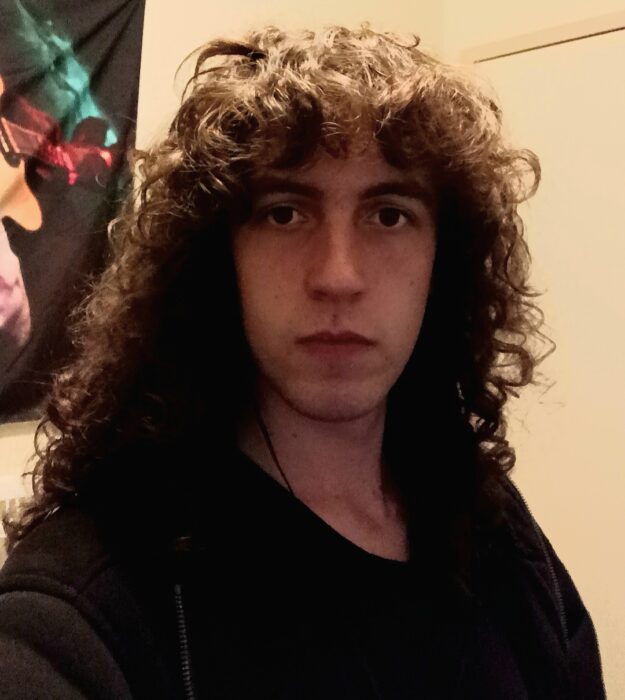
Aidan is a Mi’kmaq mixed race artist originally from Bonavista Newfoundland. Currently a Visual Arts student in his third year of study at Memorial University Grenfell Campus. In his practice he primarily works with 2D mediums such as painting, printmaking, graphite pencil, pen and ink, photography, and a number of other mediums depending on the project.
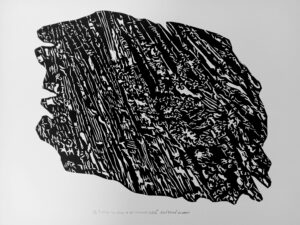
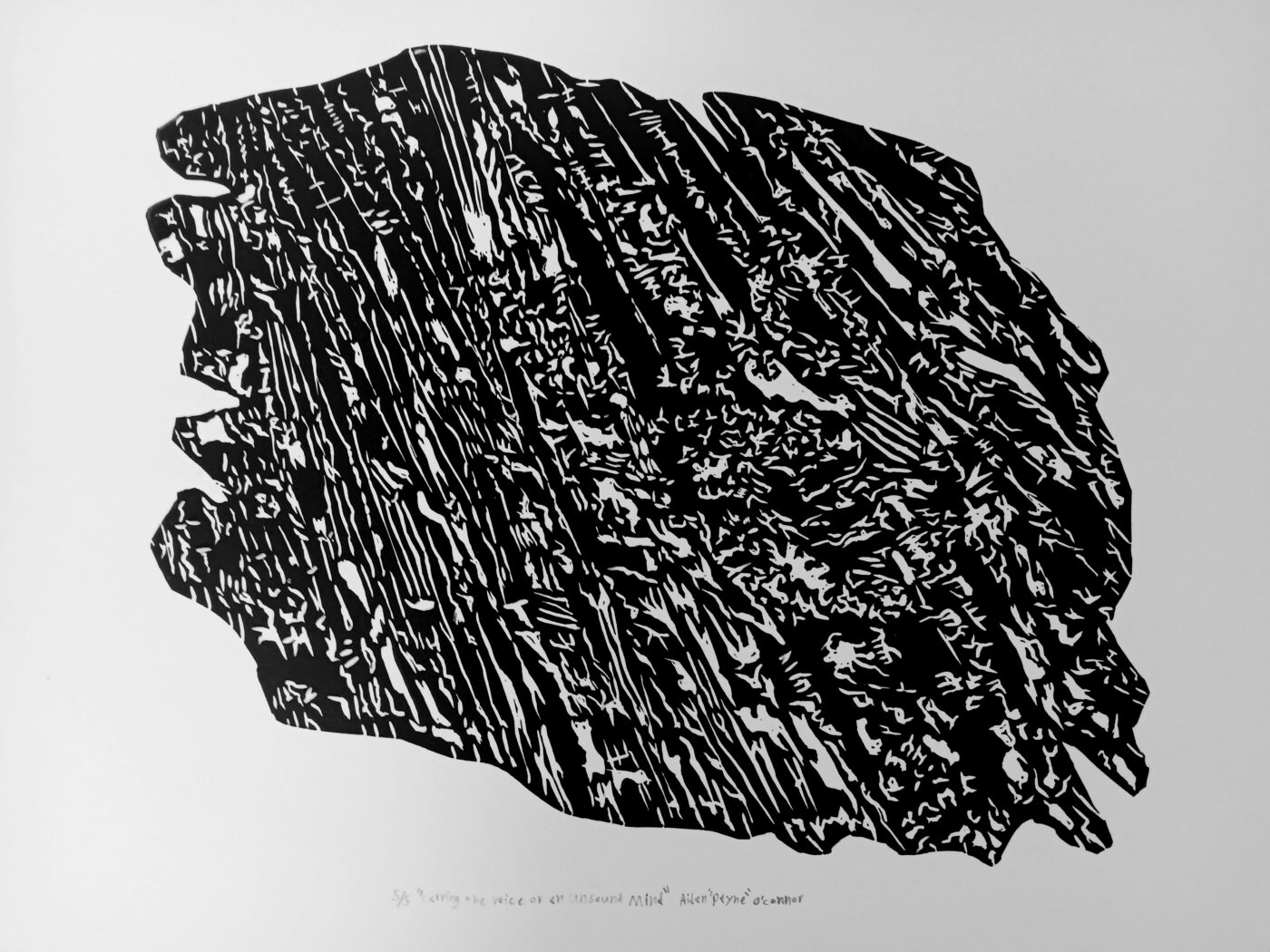
Carving the Voice of an Unsound Mind was one of the first projects Aidan created after enrolling at Memorial University in 2023. It resulted as part of an intro print course assignment in which he was required to translate Carving the Voice of an Unsound Mind was one of the first projects Aidan created after enrolling at Memorial University in 2023. It resulted as part of an intro print course assignment in which he was required to translate the the texture of a natural object into a print medium. In order to translate this texture into image form, a graphite pencil was used to take a rubbing of a tree stump which was then copied onto a lino block by eye over a period of time. The block was then cut to shape with a knife, then printed. The end result is an image that appears to have multiple different figures and forms, depending on how the viewer chooses to individually decipher it. Though it is somewhat rough in its construction, the work maintains a connection to nature, as well as to Aidan’s indigenous heritage, both through its literal interpretation as a recreation of the natural world, as well as through the more abstracted lens of the viewer’s thoughts. The piece invites the audience to look closer at the natural world around them and decipher their own meaning by listening to the carved voices of an unsound mind.
Aldo Cinco
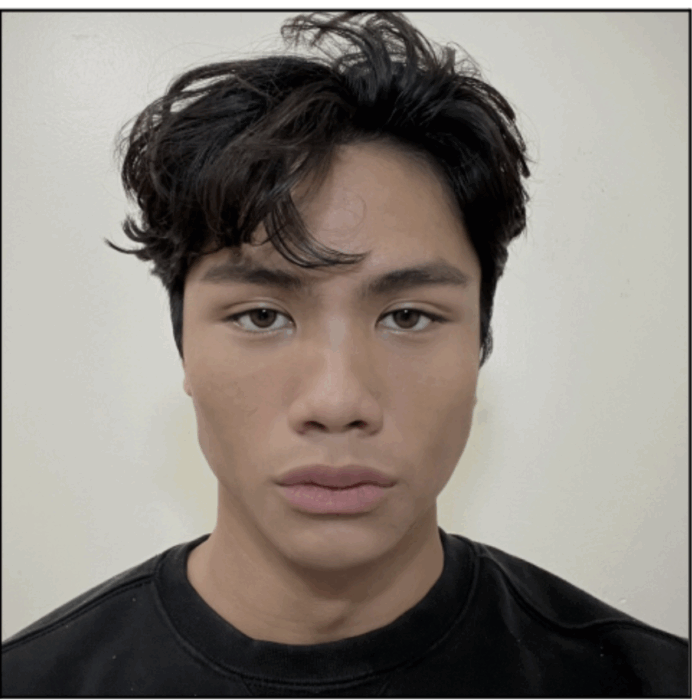
Aldo Cinco is a current third-year undergrad and mixed-media artist in the Visual Arts program of Memorial University of Newfoundland. Originally from Labrador city with a Filipino heritage, his artwork combines both Canadian and Philippine cultures in a contemporary context. Specializing in painting and sculpture but are not limited to said mediums- he explores the themes of nostalgia, time, and melancholy, always aiming to either resonate or evoke a sense of personal sentiment through imagery. Heavily influenced by figures such as the Pre-Raphaelites, Impressionists, and William Morris’s theories. Aldo’s main focus as an emerging artist is to capture the ever-changing moments of life true to nature whilst prioritizing practical beauty.
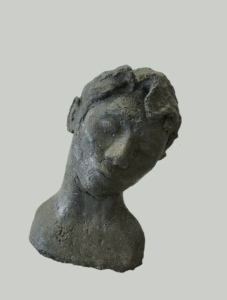
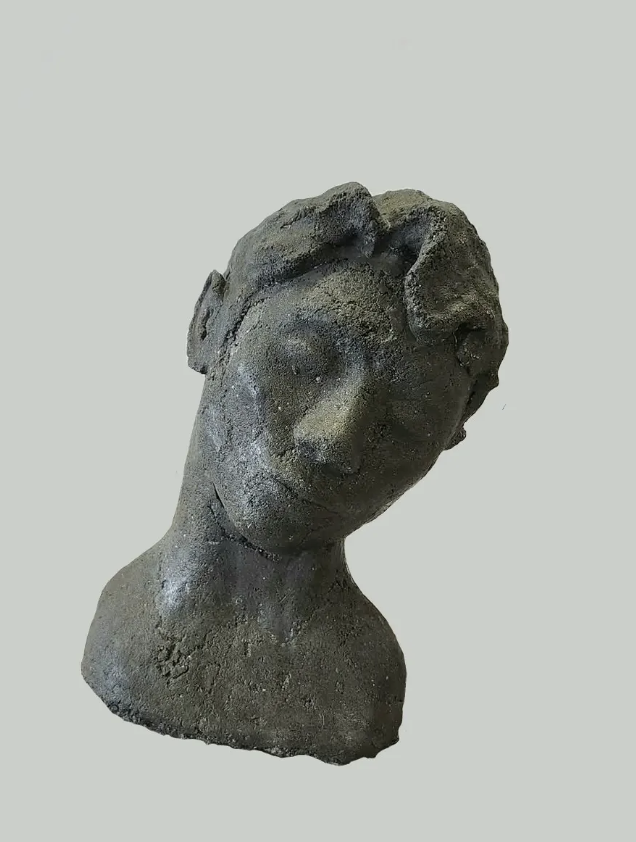
Serene Sleep is a concrete-based sculpture that I developed while reflecting on the interplay between materiality and human experience, particularly within university. The piece explores the self through a portrait bust, using concrete not just as a physical medium but as a metaphor for endurance, labour, and resilience, concepts that resonate deeply with the undergraduate experience. As a third year student, I’ve witnessed firsthand how balancing coursework, part-time jobs, and personal life requires both strength and flexibility, and these themes are embedded in the sculpture’s weight, texture, and form.
During the creative process, the askew posture came about instinctively, highlighting the occasional instability and fatigue that accompanies class learning and constant deadlines. The raw nature of concrete mirrors the tangible effort involved in developing one’s academic and personal identity, while the shape and contours
reflect moments of introspection and rest that ground individuals amidst pressure. Serene Sleep also caters toward the broader social and intellectual environments beyond school. It embodies quiet perseverance, manual labour, and hard work ethic and the way small reflective pauses have the power to restart both the mind and body. By situating this work in the context of encountered journeys, I aim to draw a connection between the material’s solidity and the human experience of endurance, resilience, and growth.
Anastasia Tiller
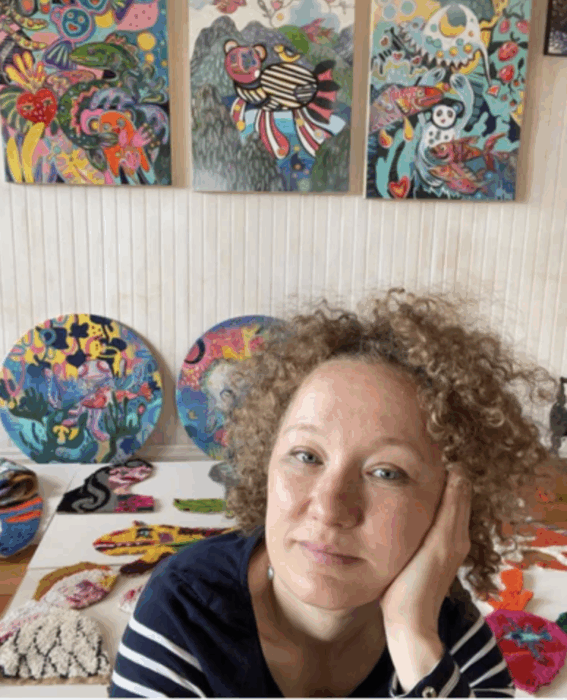
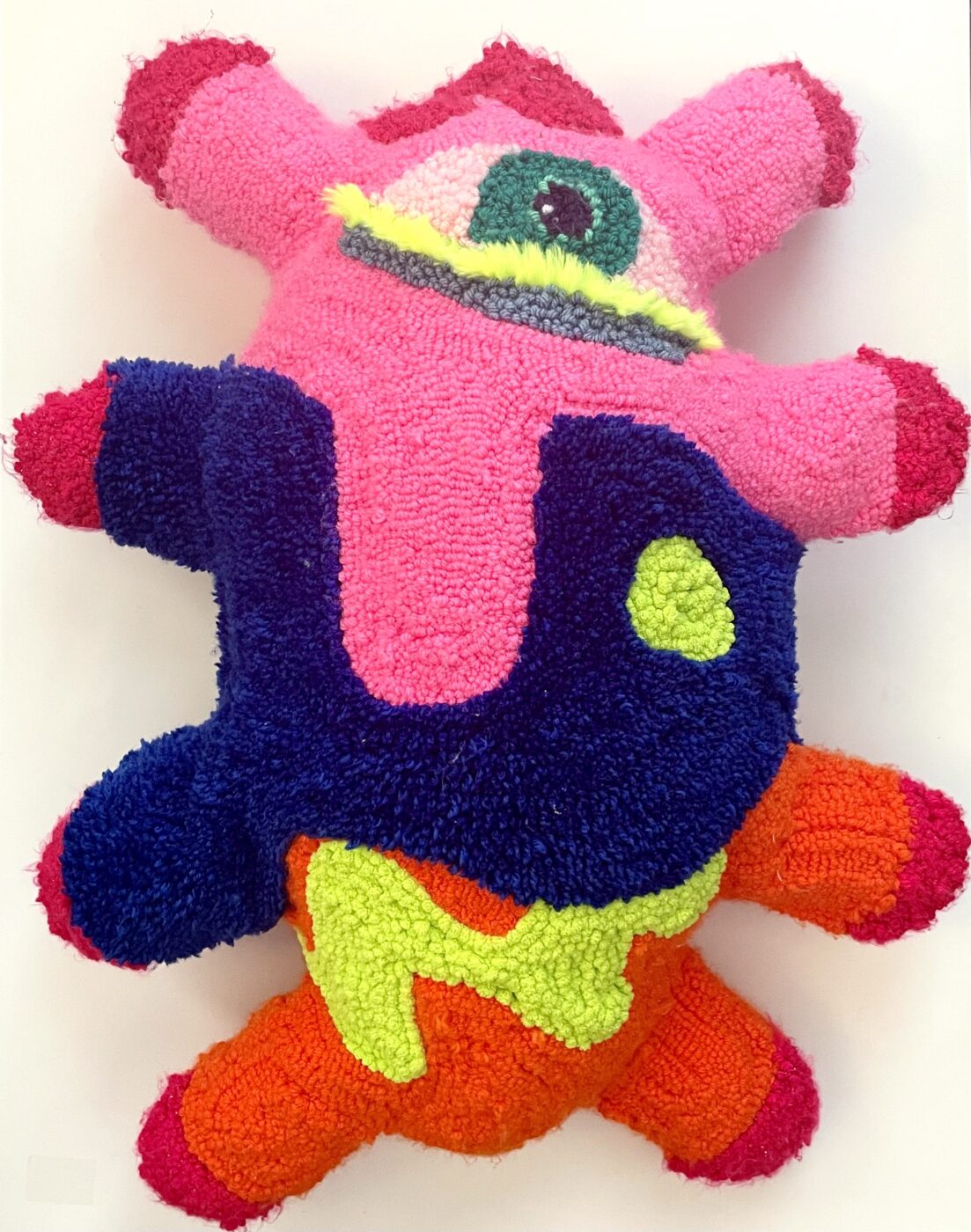
Anastasia Tiller is a multidisciplinary Canadian artist residing on Bonavista Peninsula in Newfoundland and Labrador. She has been exhibiting her work in Canada and internationally since 2008. She takes a fun and whimsical new spin on the traditional Newfoundland and Labrador art of rug hooking. Hooking was a craft taken up by Tiller during the long winters in Lethbridge, NL. With a fantastical approach to ocean creatures, the imagery is a playful departure from traditional approaches.
Anne Cortez
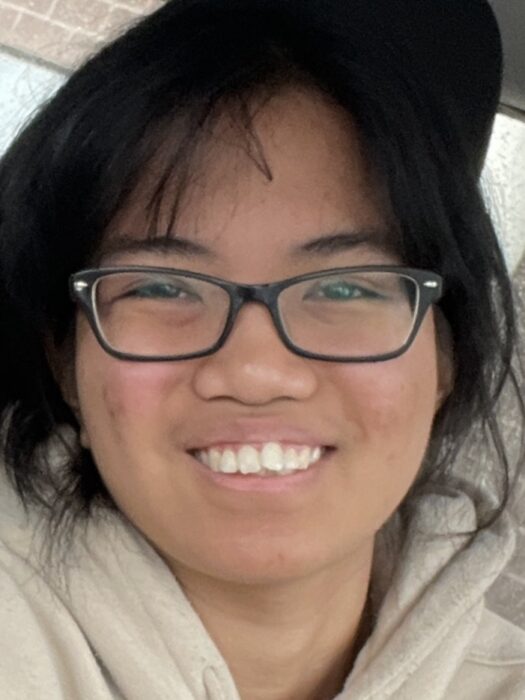
Anne Cortez is an artist with Filipino roots whose surrealistic, colorful works explore themes of love, fantasy, and identity. She moved to Newfoundland with her family in 2019 to explore different opportunities and artistic avenues to express what’s in her heart and true self. She now sees Newfoundland as her new home.
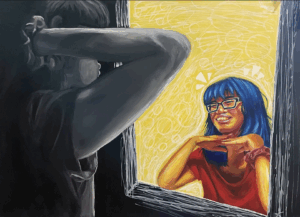
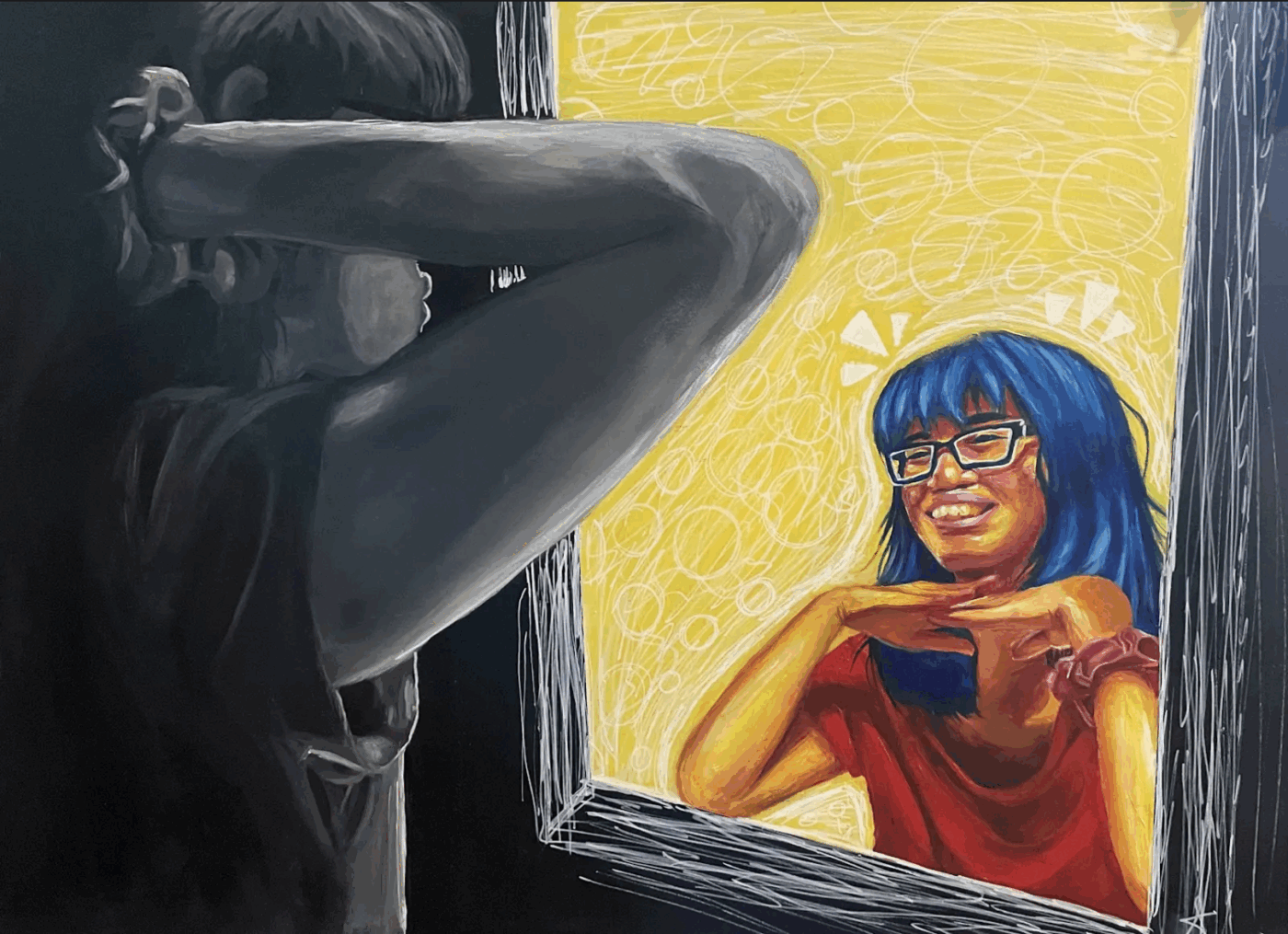
This acrylic on wood panel painting portrays two versions of myself gazing at each other, rendered in contrasting colors to symbolize the external “dull” reality and inner “joyful” truth. The monotone foreground represents my outer self, the version I present to the world, blending in with others as we move through the routines and distractions of daily life. This version is quiet, almost camouflaged, shaped by expectations and the rhythm of everyday existence in “real life”. However, my vibrant reflection serves as a mirror for the vessel, revealing the essence of who I truly am inside. The alternate self embodies my most cherished traits: joy, self-esteem, kindness, and creativity. This inner self observes a beautiful, graceful woman nurturing and taking care of herself, in warmth and admiration.
My painting also serves a message that regardless of life’s hardships within a “muted” world, our colorful inner glow remains intact within our souls.
Brian Amadi
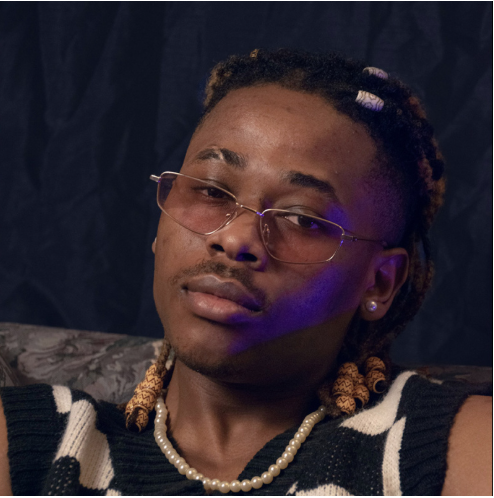
Brian Amadi is a multidisciplinary artist, filmmaker, and tattooist based in Newfoundland. With a background in visual art, criminology, and public policy, Brian blends fine line tattooing, filmmaking, and painting to explore identity, Blackness, and belonging. He is the founder of Fawk Your Walls, Rebels at the walls and The Art of Being Black. His work has been exhibited locally and internationally, including at The Rooms, rOGUE Gallery, and the Canadian Embassy in Portugal. A poet and advocate, Brian’s art bridges personal narrative with collective history, often using art as a tool for transformation, resistance and social cohesion. Ultimately, he aims to use his work to reflect the current systems of social organizatio
Echo Henoche

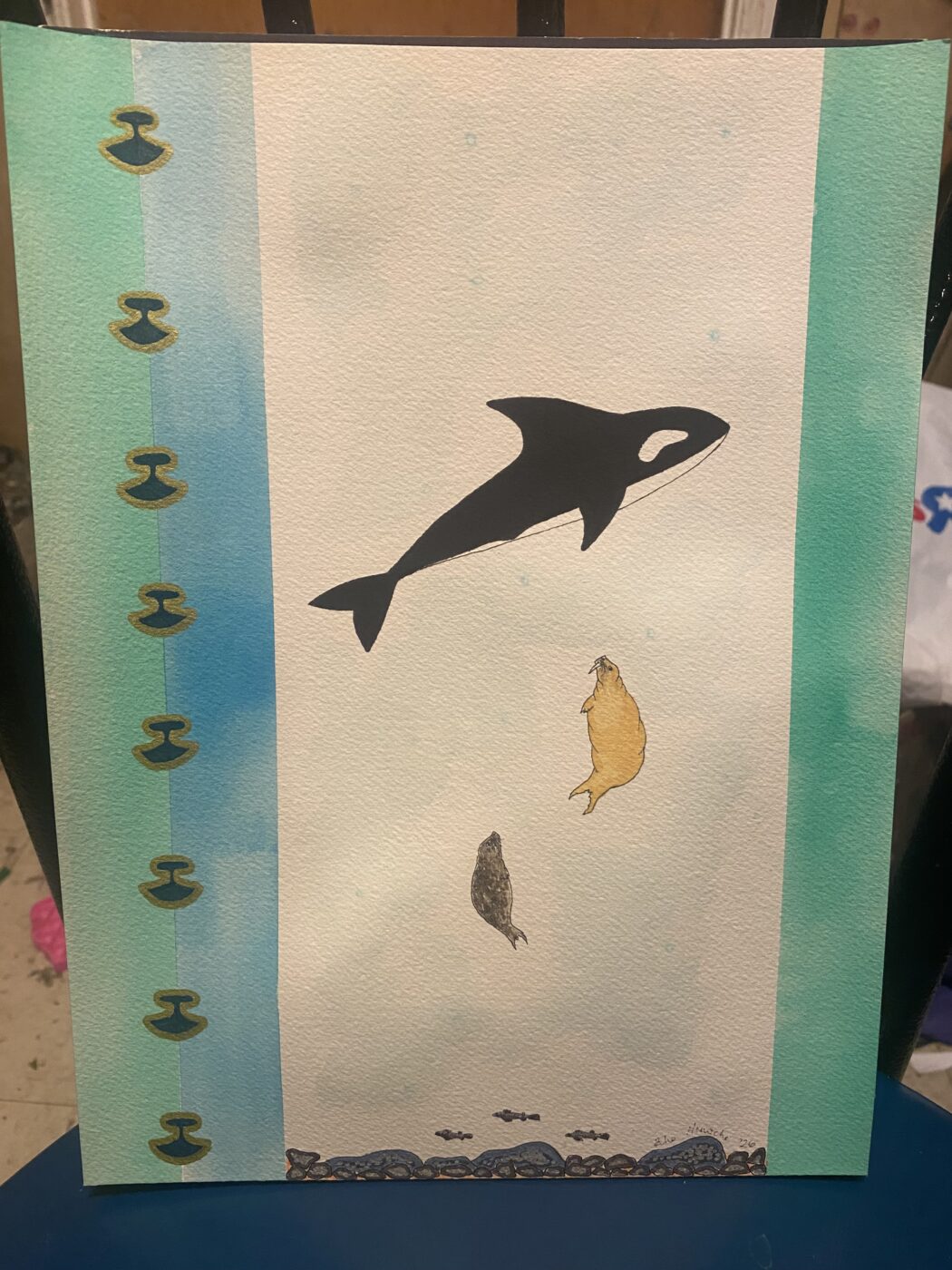
I am an Inuk artist based in Nain, Labrador. I’ve completed a project with NFB (National Film Board of Canada) back in 2017, short film called “Shaman”. My film went to a few festivals based in California and New Zealand. My art work had also traveled places now, recently in the summer there was a few cruise ships in Nain, people were mentioning they were from America and Hong Kong, they’ll show off my artwork there once they get back. I’ve been doing my art now for 13 years, my medium is mainly watercolor paintings on paper, sometimes I work with acrylics and materials to add to canvases.
Emily Andrea Best
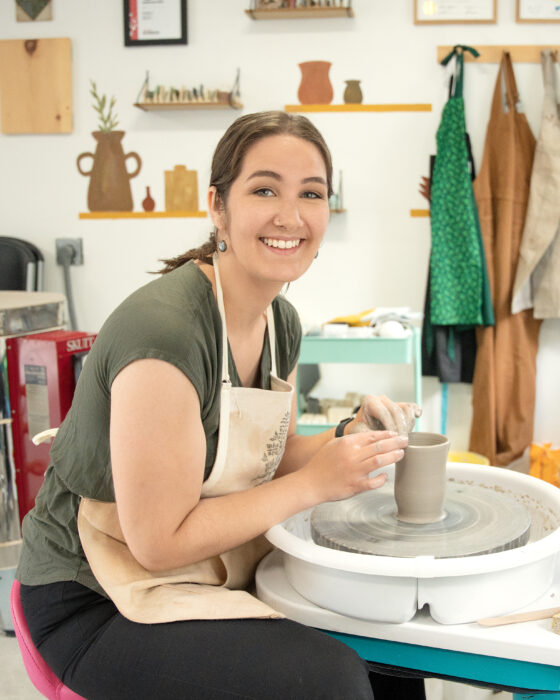
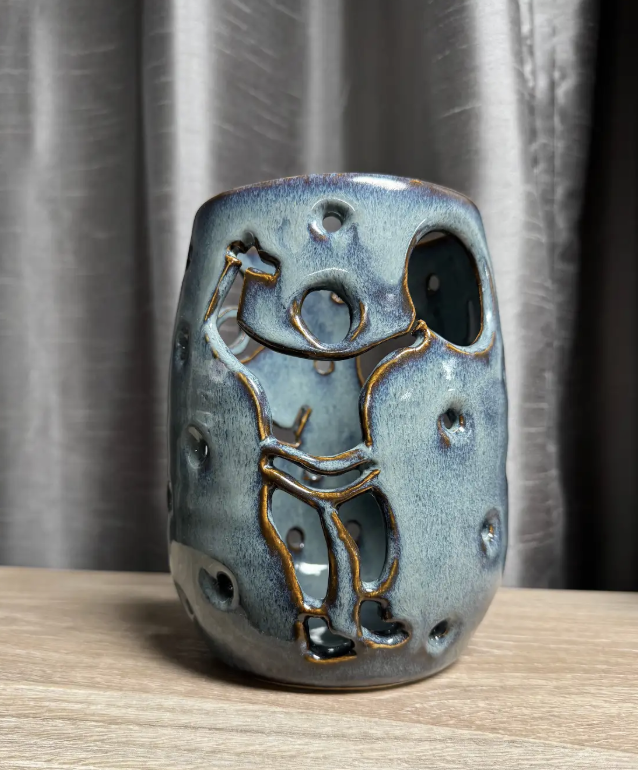
Emily Best is an award-winning mixed media artist specializing in ceramics. Emily has a bachelor’s degree in geography and business, and holds certificates in ceramics and cartography. She is of mixed Indigenous ancestry, Inuit and Scottish descent, and takes inspiration from her natural surroundings. She has facilitated workshops in polymer clay, sewing, macramé, and pottery, and held her first community project and exhibit, Sharing the Light, in November 2023.
Ernest Boateng
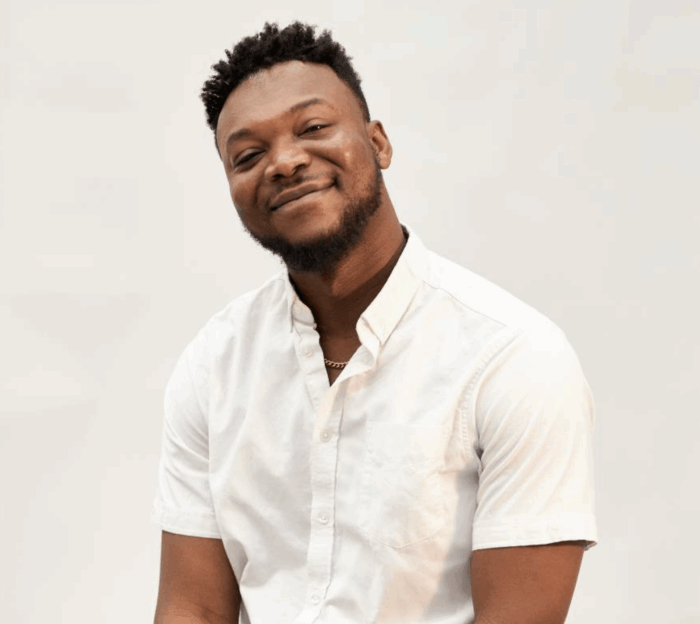
Ernest Boateng is a Ghanaian artist and designer based in Corner Brook, Newfoundland and Labrador. He holds a Bachelor of Arts in Communication Design from Kwame Nkrumah University of Science and Technology and recently completed his MFA in Visual Arts at Memorial University’s Grenfell Campus. His practice bridges conceptual and documentary approaches, exploring themes of labour, migration,
identity, and belonging. Through portraiture and visual storytelling, Ernest’s work brings visibility to Black presence in remote or overlooked landscapes, inviting dialogue around inclusion, memory, and Place.
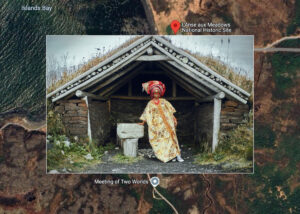
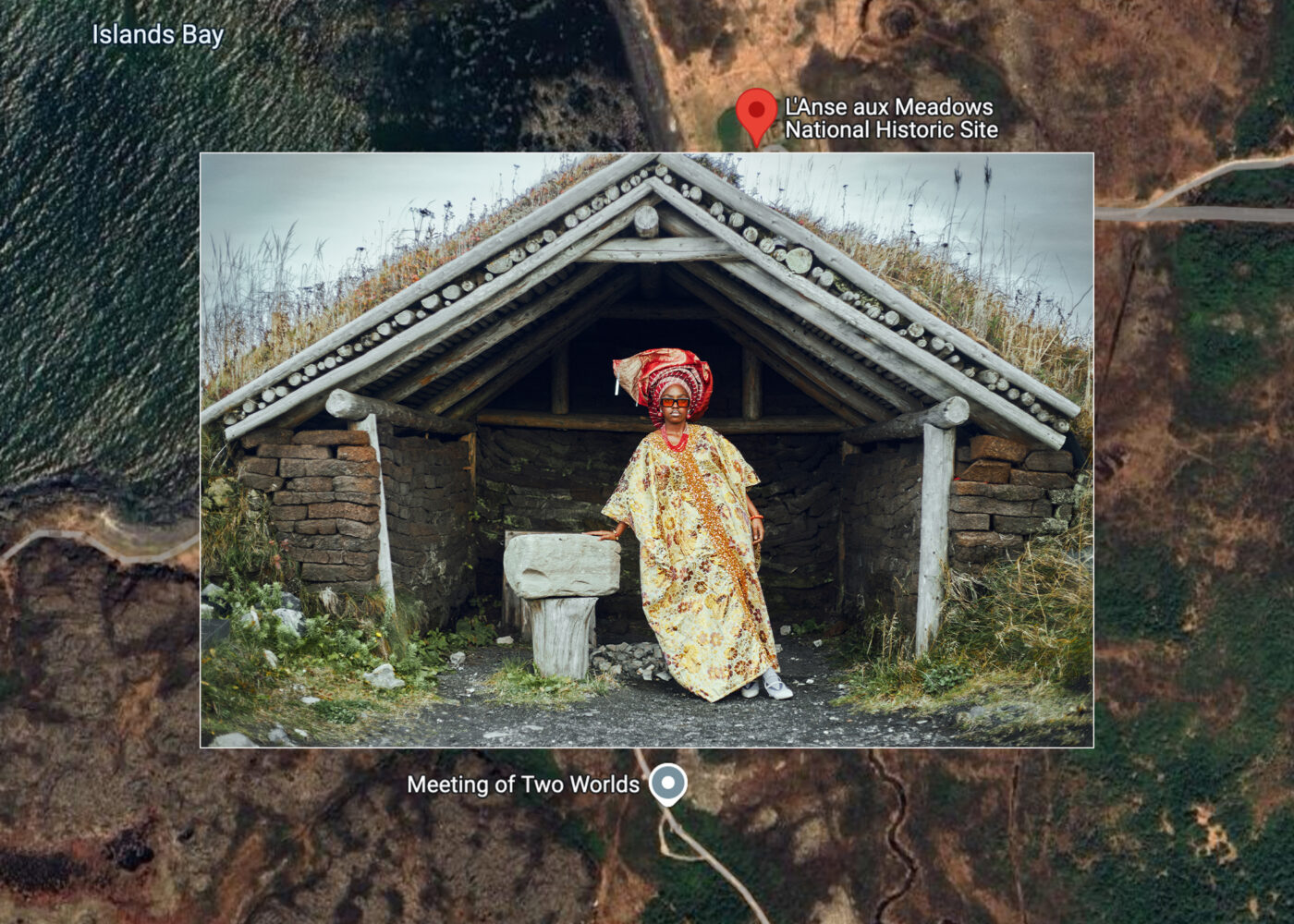
This work challenges idyllic portrayals of landscape as neutral or untouched, revealing the layered histories of power, erasure, and exclusion embedded within these environments. By placing African newcomers within Newfoundland’s iconic sites, such as the Tablelands and Western Brook Pond. The project disrupts dominant narratives and reimagines the landscape as inclusive and reflective of contemporary diversity.
Vibrant portraits of Black individuals in traditional African attire assert both presence and pride, transforming scenic backdrops into spaces of cultural affirmation. These images celebrate Newfoundland’s evolving identity and the resilience of Black communities actively shaping it. Bridging the personal and political, the work positions Black people not as visitors, but as integral to the province’s future, culture, and memory.
Gaayathri Sukantha Murugan
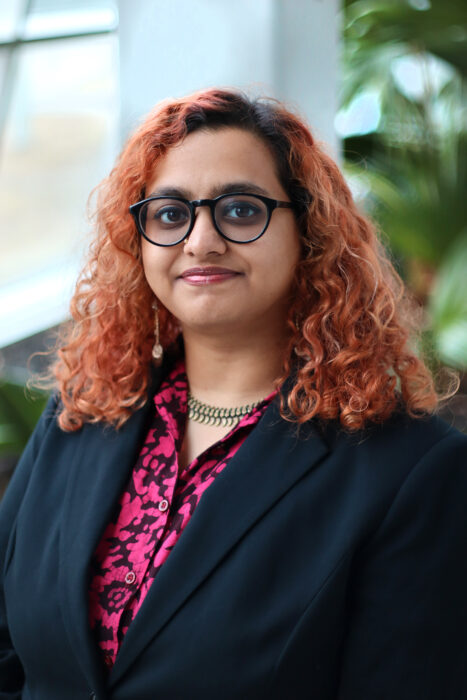
Gaayathri Sukantha Murugan (Gaaya) is an interdisciplinary artist and a queer racialized woman from Chennai, India. Gaaya first came to NL in 2018 as an international student and graduated from the Visual Arts program at Grenfell Campus. Her art practice explores the self/intersectional identity, inspired by her Tamil culture, her struggles with mental health and depression, and lived experience of being an immigrant in Canada. Gaaya’s first solo exhibition was in 2021 and her work has been exhibited across the province. She has served on the Board of Directors for VANL and Eastern Edge; worked at the Grenfell Art Gallery and with CB Nuit; and co-curated Intangible with Andrew Testa and Georgia Dawkin. After graduating with an MA in Political Science in 2025, Gaaya is pursuing a second Master’s degree in Gender Studies at Memorial University, and is currently the Executive Director of Communications for the Graduate Students’ Union.
Ginok Song
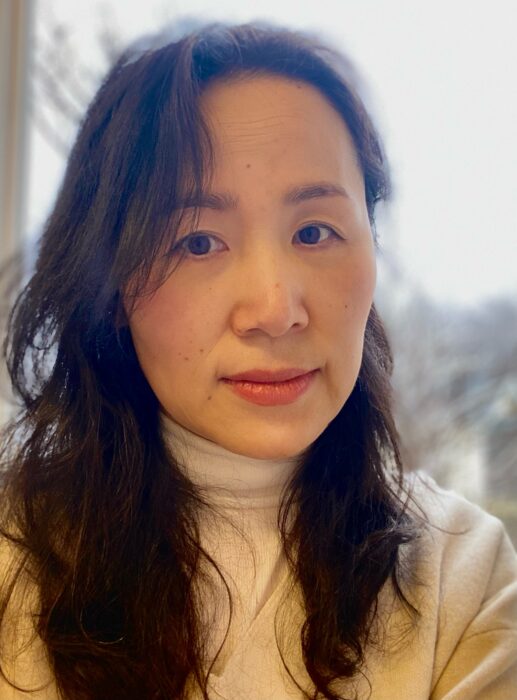
Ginok Song is a Korean-Canadian visual artist whose work explores identity, womanhood, and cultural belonging through painting. Born and raised in Busan (formerly Pusan), South Korea, she earned a Bachelor of Fine Arts in Painting from Pusan National University in 1998. After relocating to St. John’s in 2000, she continued her artistic and academic pursuits, completing a Master of Philosophy in Humanities at Memorial University in 2017, where her research focused on the representation of women and the politics of selfhood.
Influenced by Atlantic Realism, Song’s practice reflects a journey of becoming—meditating on home, memory, and transformation across time and place. Working primarily in painting, she also creates murals and print projects that engage public space and community. She has held solo exhibitions at The Rooms Provincial Art Gallery and Christina Parker Gallery, and her work is held in public and private collections internationally. She lives and works in Petty Harbour.
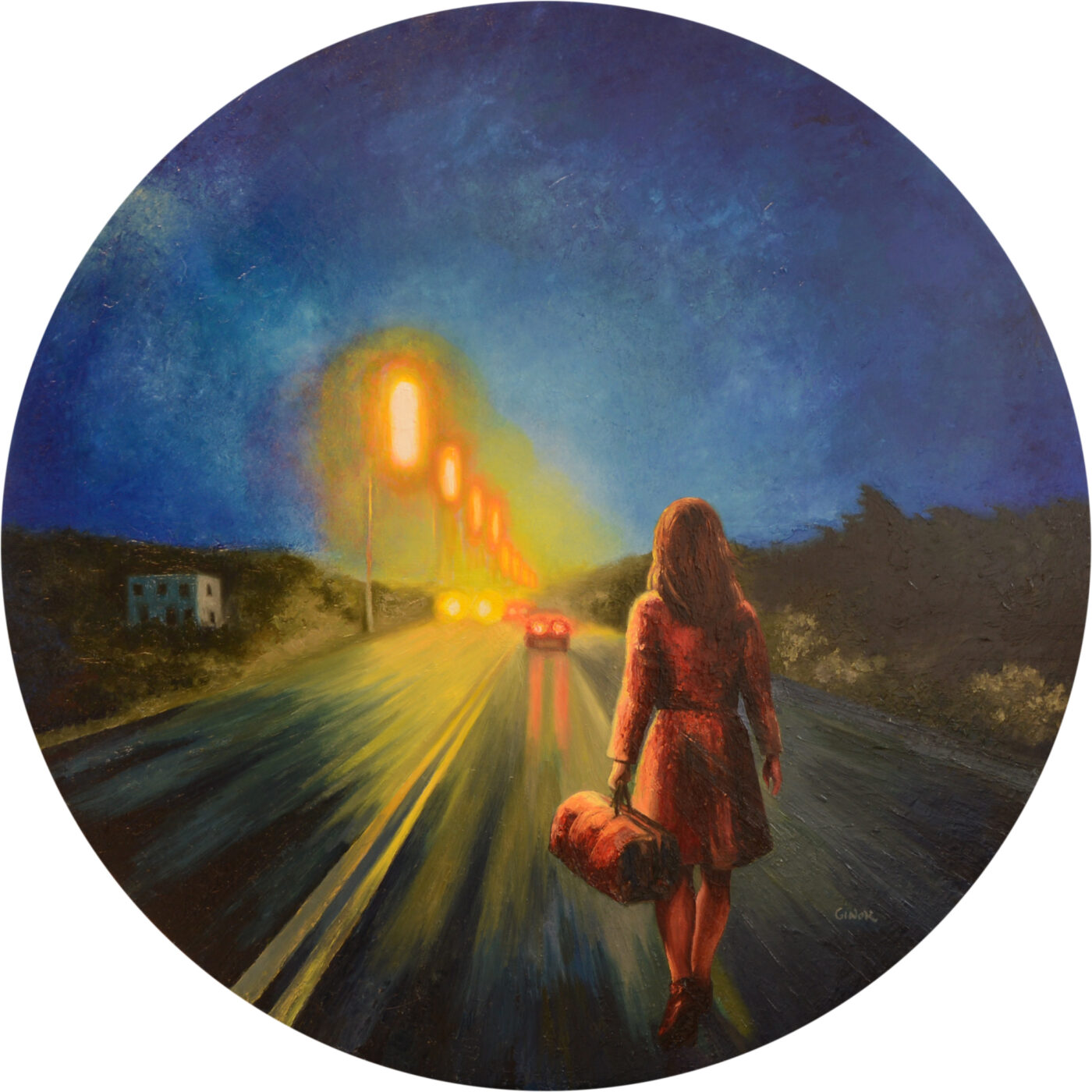
Night Departure depicts a woman walking alone along a road at night, carrying a small bag as she moves forward into the unknown. The scene is quiet yet charged with movement—streetlights stretch into the distance, cars pass by, and the road glows with shifting colour and reflection. For me, this painting is deeply symbolic, especially of my younger self choosing her own path despite uncertainty.
The darkness is not only a place of fear, but of possibility. As she walks, the landscape changes—light appears and disappears, danger and curiosity coexist, and unfamiliar eyes may watch as she passes. Still, she continues. The act of leaving becomes an act of courage.
This painting speaks to the moment of decision: when staying feels impossible and moving forward, even into mystery, becomes necessary. Night Departure is about trusting one’s inner compass and committing to a journey, regardless of how unclear the road ahead may be.
Hadiza Bello
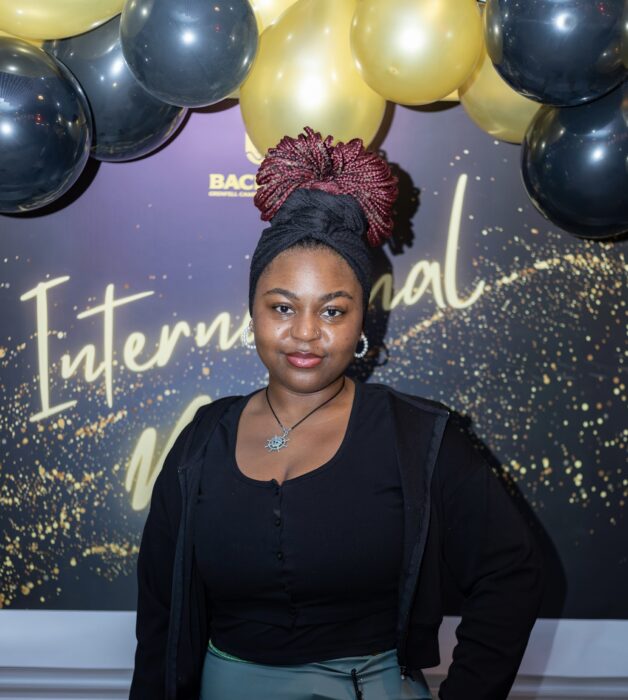
Hadiza Bello is a Nigerian visual artist based in Newfoundland and Labrador, with a Bachelor of Fine Arts from Memorial University’s Grenfell Campus. Working across painting, textiles, and sculpture, her multidisciplinary practice explores Black joy, cultural memory, and the resilience of African diasporic traditions. Hadiza creates work that sparks critical conversations around race, representation, and belonging.
Hadiza’s work has been exhibited in significant group shows, including Construct/Obstruct (Tina Dolter Gallery, 2024), Fresh Paint/New Construction (Art Mûr Gallery, 2024 & 2025) and Everybody Eats (Eastern Edge, 2025).
Her upcoming first solo exhibition (June–July 2026) at the Rotary Arts Centre will be an unapologetically Black and African-centred body of work, bringing together paintings, textiles, beadwork and prints to affirm her identity and create spaces of representation for the Black community in the province.
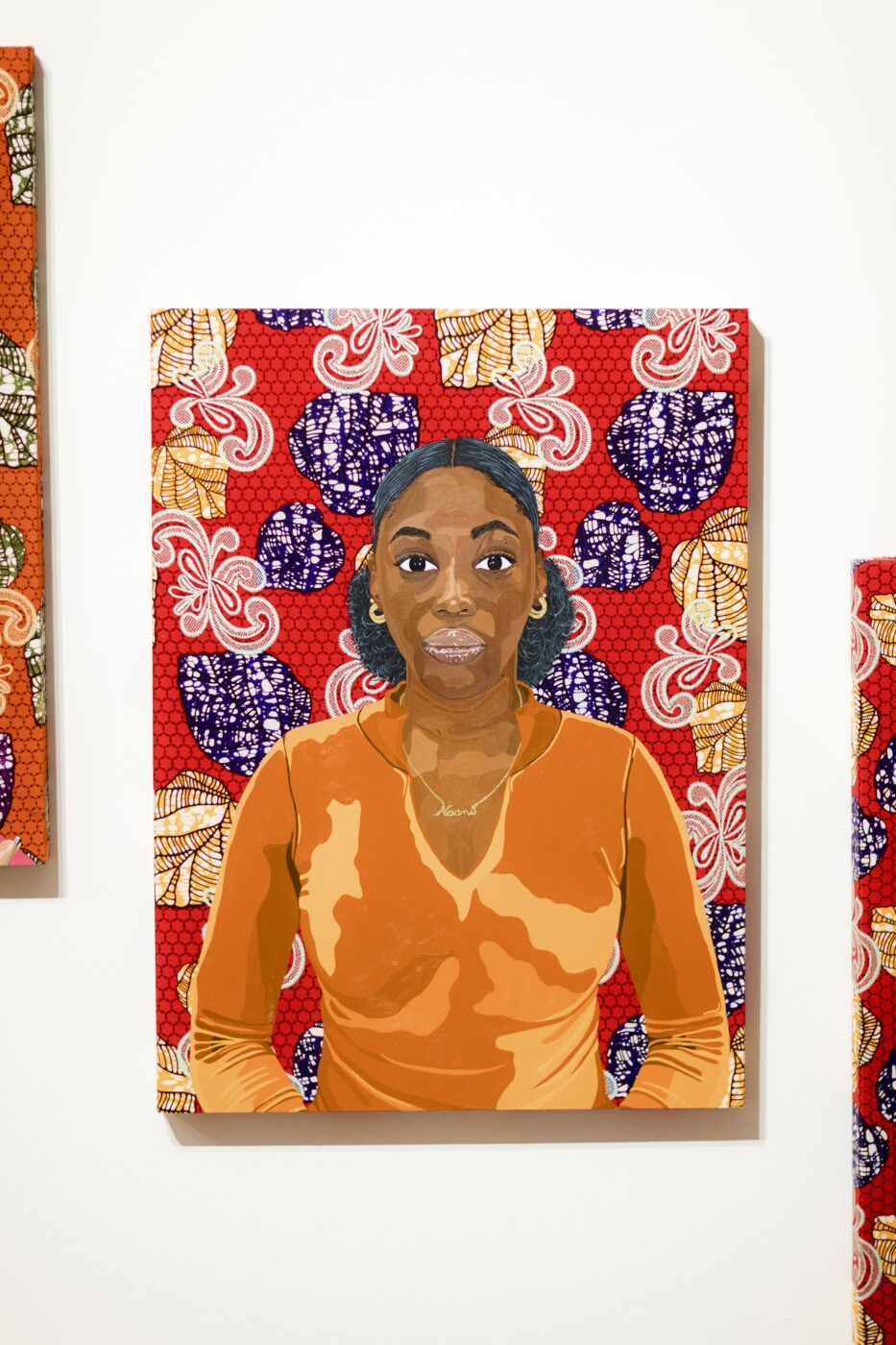
This piece reclaims the space of Renaissance portraiture, a visual language of power, beauty, and status, that historically excluded the Black experience. I challenge this omission of Black women from the canon and reimagine the “Golden Age” of portraiture from the Black woman’s perspective. Painted on Ankara fabric, the work (1 of 6) weaves together my African heritage with Western artistic sensibilities, creating an aesthetic that is both deeply personal and universally resonant.
Referencing well-known Renaissance works, I place myself and Black women from my social circle at the center of a dialogue about representation, identity, and historical erasure, empowering my community and asserting our presence as a declaration of Black beauty, culture, and resilience.
Linh Pham
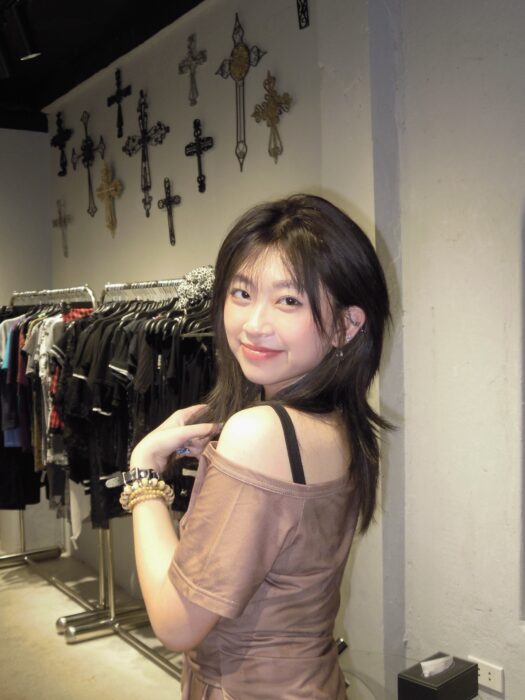
Linh Pham (She/Her) is a Vietnamese multimedia artist, currently pursuing a Bachelor of Visual Arts at Memorial University of Newfoundland. Linh’s art practice works across painting, drawing, sculpture, and textile arts, explores themes of human emotions through materiality, texture and experimental processes. Her work blends narratives with crafting techniques, with mediums such as paper sculpture, collages, drawings, paintings, embroidery and crocheting. Community engagement and sustainability are crucial elements in Linh’s practice, as she is deeply inspired by cultural storytelling and aims to invoke collective emotions through creative expressions.
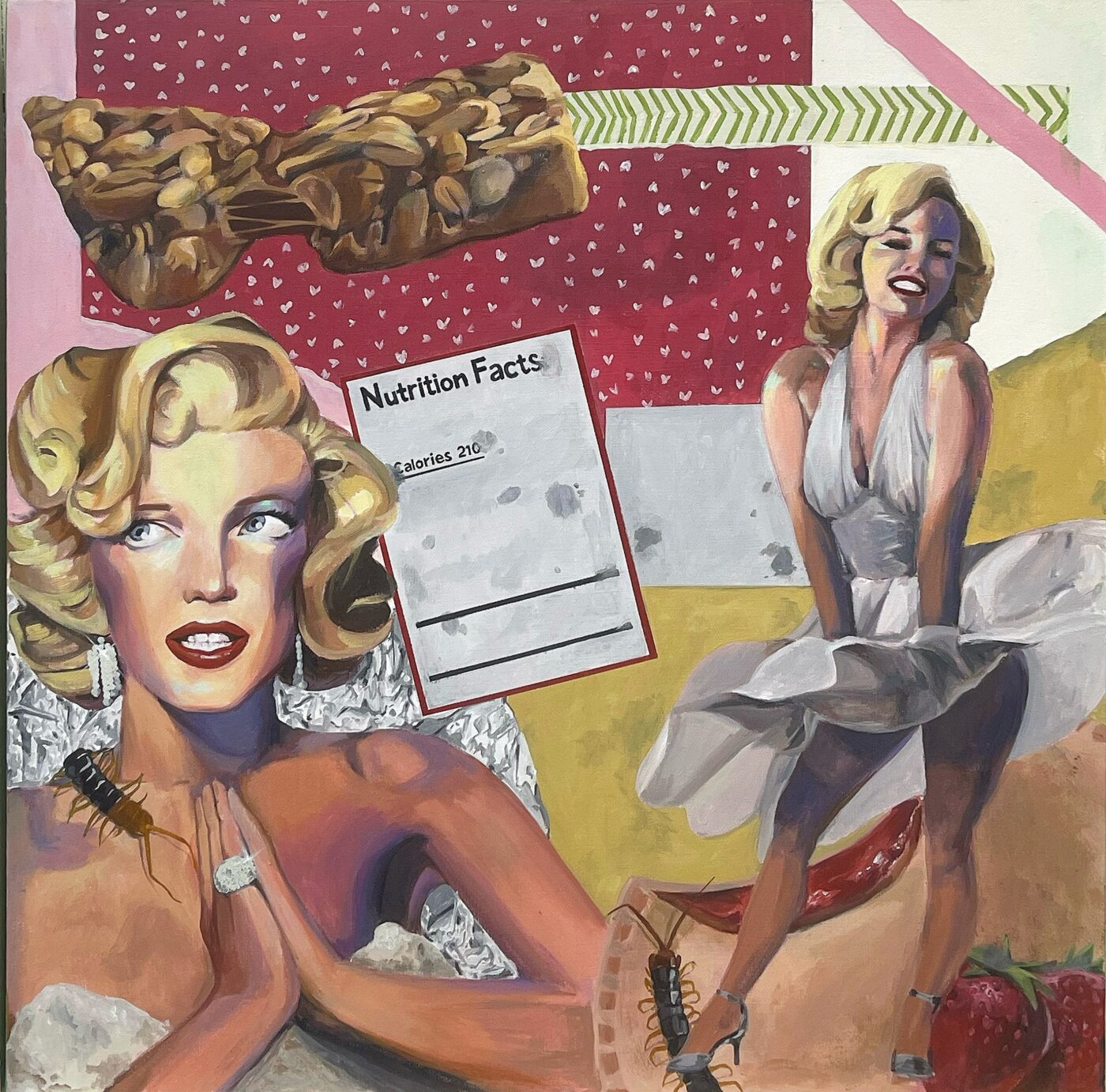
This painting is a commentary on the commodification of women’s bodies within capitalist and patriarchal mass media, with the visual reference of Marilyn Monroe, a cultural symbol of sex and beauty. Monroe’s image depicts how femininity is manufactured and repackaged as something glamorous on the surface, while obscuring the suffering behind the fantasy and the implications of women’s value being tied to appearance. Elements of nutrition labels, candy bars, and strawberries serve as representational components that encapsulate consumer culture, critiquing the notion of equating the female body with edible, disposable goods. By incorporating unsettling details of insects crawling across the skin, I want to draw attention to the juxtaposition between illusion of desirability and exploitation hidden in the corners. The violence rooted in pushing this idealization is reflected in Marilyn Monroe’s career: an icon who was celebrated by mass media yet mistreated by the very industry that profited from her image. Ultimately, my intention is to bring upon a perspective of how women are consumed and dehumanized under systems of patriarchal power through visual languages.
Ismael Gomezcana Cuevas
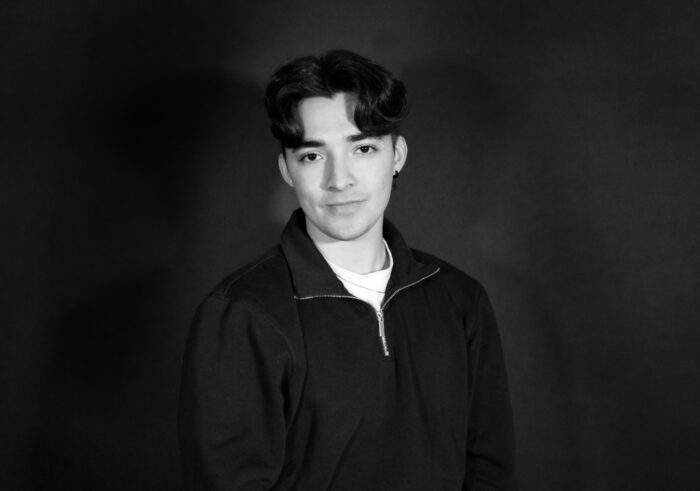
Ismael Gomezcana Cuevas is a Mexican artist currently based in Newfoundland, Canada. Working across sculpture, textiles, performance, dance, makeup, photography, and installation, his practice blends cultural heritage with contemporary forms of expression. He has presented solo exhibitions at Grenfell Campus and performed at community and cultural events such as the Winter Festival of Cornerbrook, the Arts and Culture Centre with the Association for New Canadians, and the Rotary Arts Centre Theatre for a Día de los Muertos. His work has also been featured in group exhibitions at the Arts and Culture Centre, including a project exploring artistic movements of the modern period. Most recently, Gomezcana participated in CB Nuit 2025 with a solo aerial silks performance.
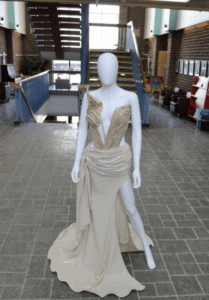
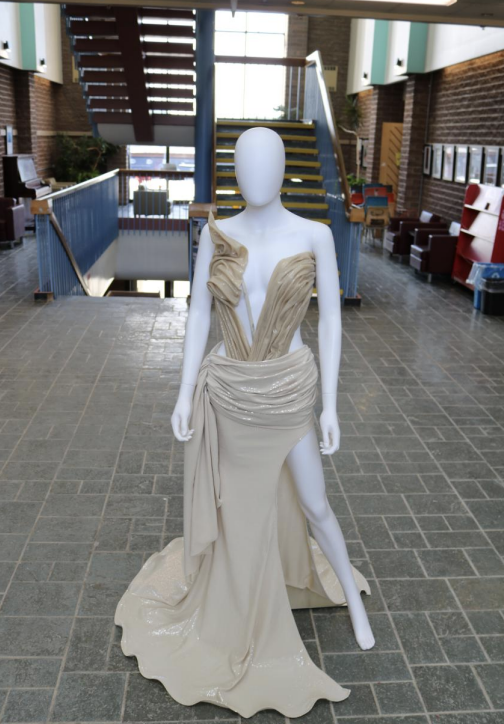
For this project, I chose to explore the intersection of sculpture and textiles, merging these two disciplines to create a complex corset. Although it may initially appear softly draped on the body, the piece is supported by a rigid internal structure, making it extremely sturdy, almost shell-like. Positioned between the body and the exterior world, the corset functions as protection and exposure, simultaneously shielding the wearer while revealing them.
For this project, I chose to explore the intersection of sculpture and textiles, merging these two disciplines to create a complex corset. Although it may initially appear softly draped on the body, the piece is supported by a rigid internal structure, making it extremely sturdy, almost shell-like. Positioned between the body and the exterior world, the corset functions as protection and exposure, simultaneously shielding the wearer while revealing them.
Jennie Williams
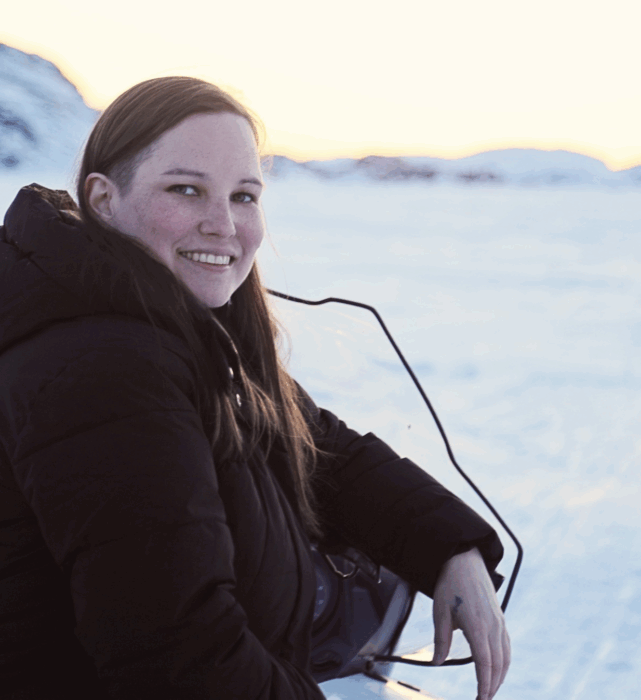
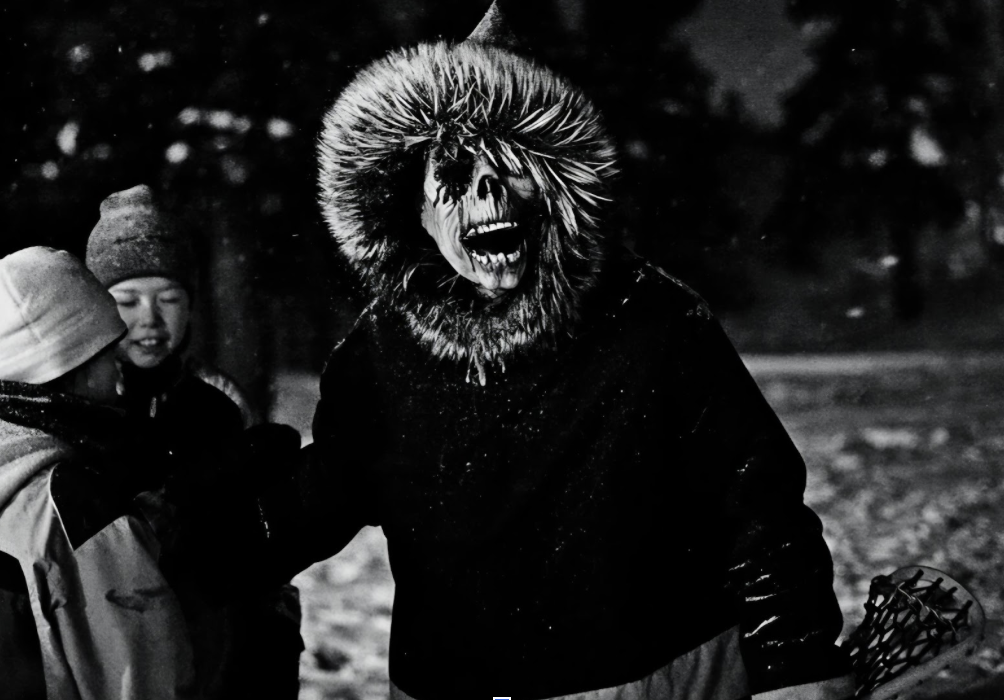
Jennie Williams is an Inuk photographer and filmmaker, born and raised in Labrador. She photographs people in their everyday environments and circumstances, working to document practices and traditions in the manner that they are celebrated in Labrador today.
Jessica Brown

Jessica Brown is a producer, director and screenwriter based in St. John’s, NL, whose work involves both documentary and fiction elements for TV and film. In addition to her artistic practice, Brown is the founder of Northern Film Initiative that aims to empower indigenous youth in film and tv industry.
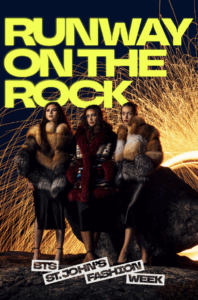
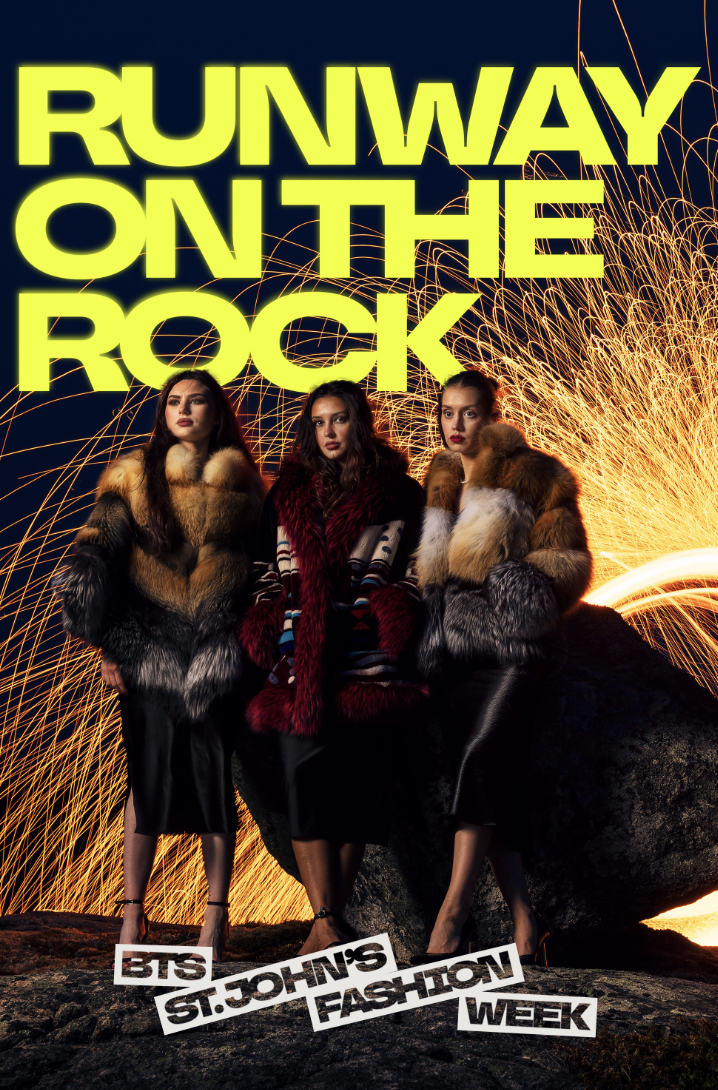
Runway on the Rock is a reflection of what becomes possible when community, culture, and creativity move together.
As an Inuk artist and the founder of St. John’s Fashion Week, this project holds deep meaning for me. Fashion has always been more than clothing, it is storytelling, resistance, celebration, and identity. Runway on the Rock captures the spirit of our city and the people who shape it, documenting a fashion week rooted in place, collaboration, and lived experience.
This series honours local designers, models, stylists, performers, and creatives whose work is often built quietly behind the scenes. It also creates space for Indigenous voices, aesthetics, and worldviews to be seen on our own terms, present, contemporary, and evolving. Showcasing Indigenous fashion within this platform is not a gesture, but a necessity: our cultures are not trends, they are living, breathing expressions of who we are.
St. John’s Fashion Week was founded on the belief that fashion in Newfoundland and Labrador deserves visibility, respect, and investment. Runway on the Rock extends that vision by preserving these moments, our risks, our growth, our joy, and sharing them beyond the runway.
Jessica Winters
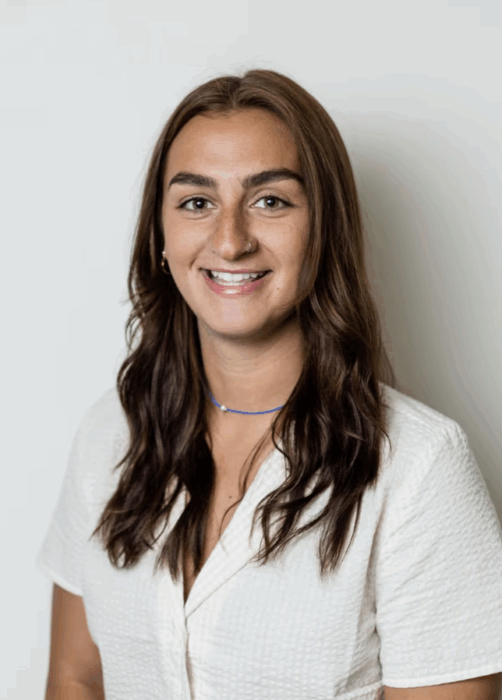
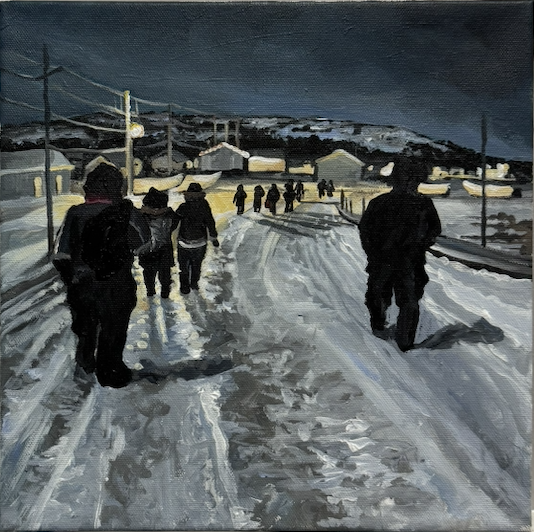
Jessica Winters, from Makkovik, Nunatsiavut and now based in St. John’s, NL, is a painter, mixed media artist, and curator. Raised in a family of artists and craftswomen, she has been creating and selling art since her teens. A self-taught artist with a biology degree from Memorial University, Winters pursued art full-time after a 2021 residency in Tilting, Fogo Island. Her work transforms everyday Inuit experiences into evocative, nostalgic scenes, exploring perspective and daily life. Featured in shows like Surfacing (Toronto) and S’olh Xaxa Temexw (Vancouver), she won a 2023 Hnatyshyn Saunderson Prize and was long-listed for the 2024 Sobey Art Award.
Megan Samms
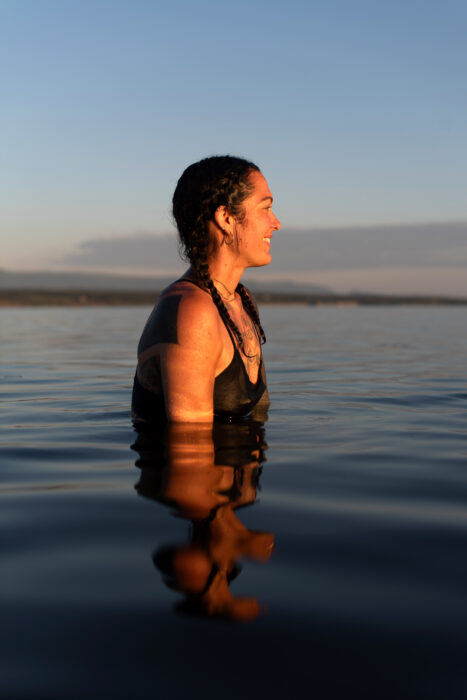
Megan Samms (she/they) is a working artist, an L’nu and Nlha7kápmx agriculturalist and community worker, and is (continually) educated through peer-to-peer, mentorship, and land-based experience and work; Samms is chair of the board of Union House Arts and lives in her home community in SW Ktaqmkuk. Samms shares work in non conventional art spaces like vacant buildings, Land or community spaces; in solo and group exhibitions at Artist Run Centres, as well as gallery spaces, and various festivals. Samms was an Anchor Artist at Nocturne Festival in Kjipuktuk in 02025; was a participating artist in the Bonavista Biennale in 02023 and 02025. In 02025 Samms administered the Second Wave Ancestral Marking Mentorship with mentor, Dion Kaszas; she was a Leighton Independent Artist in Residence (Banff Centre for Arts and Creativity), a TC2 Weaver in Residence (CRI and in private studio); and was long listed for the Sobey Art Award (National Gallery).
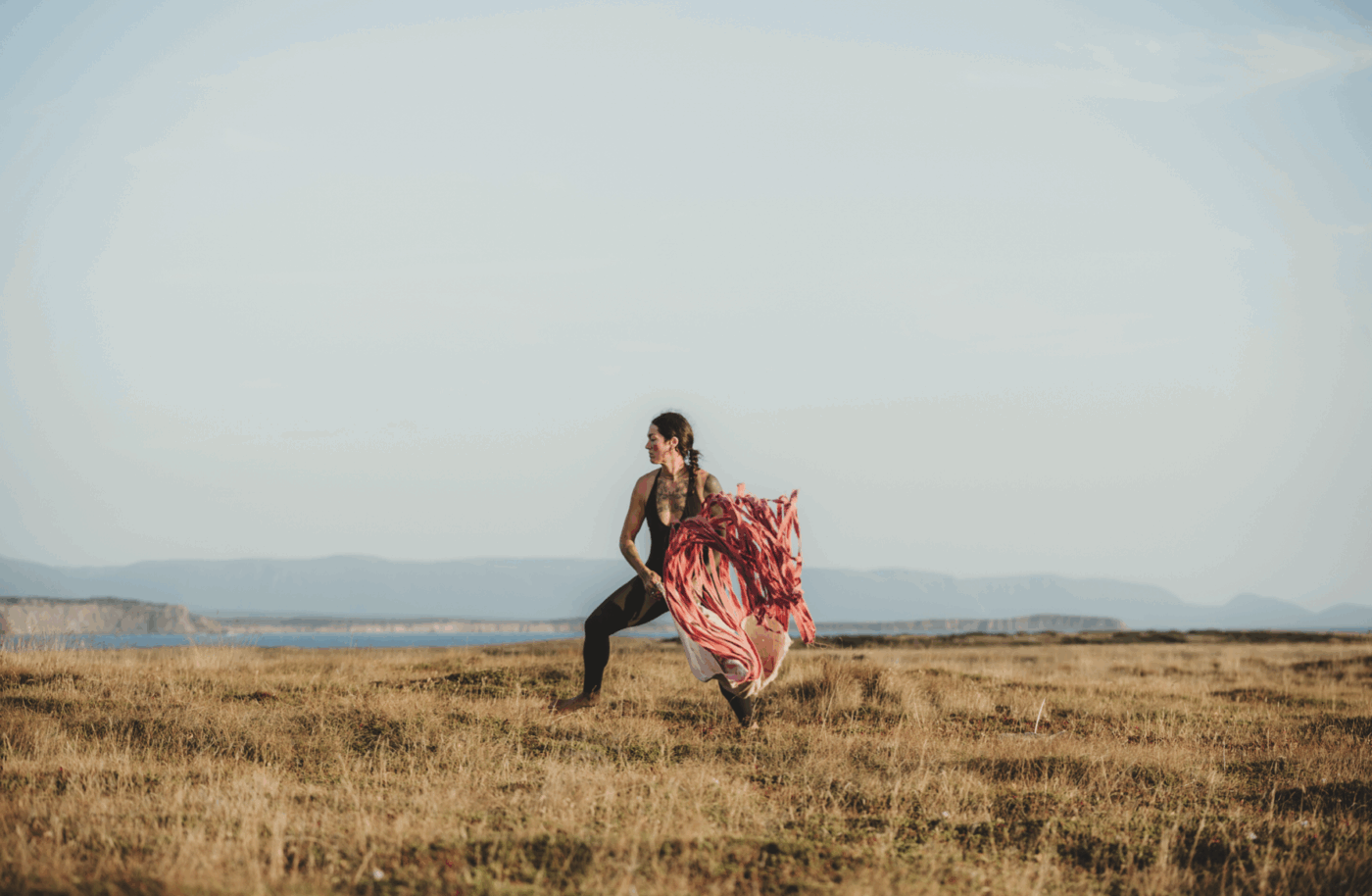
remember Peace & Friendship in Ktaqmkuk is a triangulation of three important Land sites with installation, performance, video, and projection. This work is about territory and inheritance from/in place. This work gives the opportunity to ventilate some truth and acknowledges the privilege of community and place knowledge—the performance works were a moving release to event (as a verb) to remember important parts of Katalisk. Nocturne and Codroy Seafoods have given me space to share this work.
Using the textile from a (gentle) reminder with new performance interventions and body prayers on site I connect the place of first colonial contact in 1492, the Bonavista Peninsula, where colonial interruption and violence unfolded across Northern Turtle Island; Codroy Island, the place of Peace & Friendship Treaty affirmation in September 1763, one month before the Royal Proclamation was adopted; and Kjipuktuk, the site of treaty ideation, formation, and agreement in Mi’kma’ki.
The work and series is about (re)presencing; filling out narrative; drawing attention to important spaces, places, and times; remembering and making memory; and reminding that we and our places are whole, even with the gaps, holes, and interruptions in our experiences. The work is about calling the spirit of the agreement made in Peace & Friendship back, it’s about calling our spirits; it’s about emotional knowledge, land and water memory, and interstitial spaces.
Ktaqmkukewaq L’nu are ignored in treaty agreement in our territory, treaty rights are ignored, and the people are most often left out of political negotiation and processes of consultation. It’s critically important to bring Ktaqmkuk into territorial presence—Mi’kma’ki includes Ktaqmkuk and our Beothuk relatives—because colonialism is an on-going process, not a one-time, or belonging to a time event. It’s now.
Leah Osmond
Leah Osmond is an emerging Mi’kmaw and settler visual artist from Pasadena, Newfoundland. In her art practice, she uses the mediums of drawing, painting, textiles, printmaking, and photography to convey themes such as the intricacies of memory, nostalgia and the meaning of home, contemporary Newfoundland culture, mixed Indigenous and settler identity, trauma and recovery, and her life experiences as a woman. After graduating with a BFA from Memorial University’s Grenfell Campus in 2025, she is now a member of the RAC, LAWN, and VANL-CARFAC artist collectives, and continues to base her art practice in her hometown of western Newfoundland.
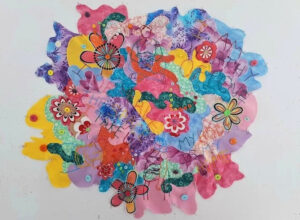
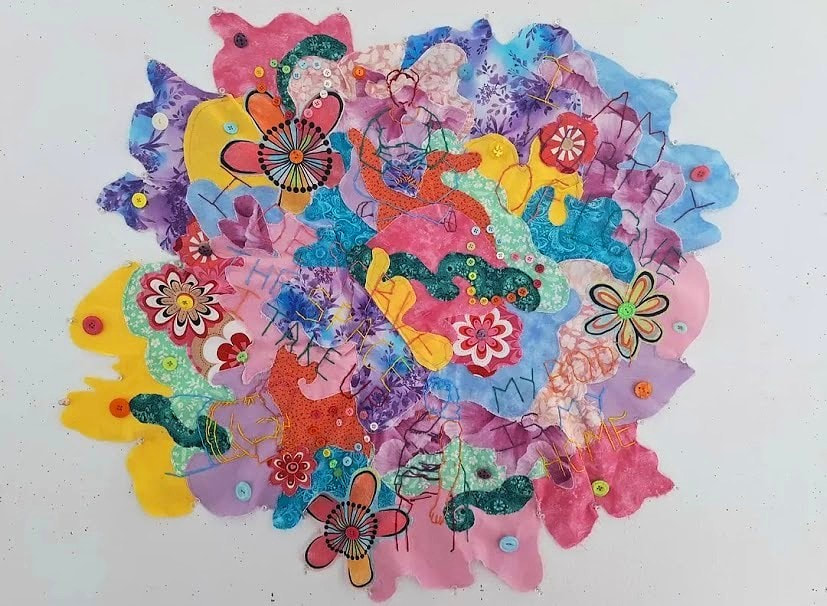
“Stretching and Shrinking” explores the intersections between fatphobia and misogyny in online spaces. Utilizing the inherently flexible and tactile medium of textiles, it responds to messaging directed at plus-sized women that both denies their humanity and their femininity. Toxic diet culture and attitudes of hatred toward the body—often seen as the solution to the perpetual patriarchal goal of taking up as little space as possible at any cost—are reversed through curves, folds, and wrinkles, forming an explosion that recalls the vibrant, overwhelming nature of the internet. Embroidered phrases such as “my body is my home,” “I deserve the space I take up,” and “I am worthy of love” surround representations of my body as it exists naturally and unapologetically, in a reclamation of identity and femininity that reverses the messaging young women consume in the digital age of opinions.
Mavis Penney
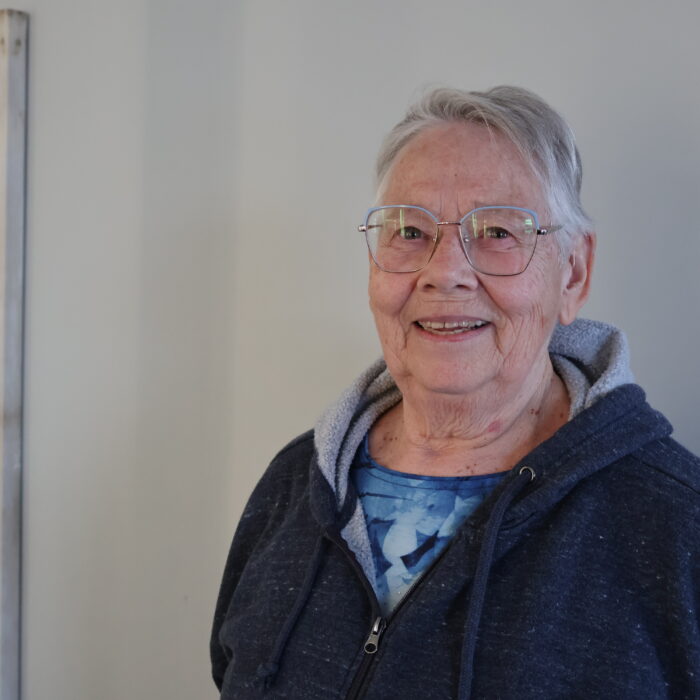
Mavis Penney is a Canadian visual artist, workshop leader, and active supporter of the arts who specializes in observational drawing and painting. She maintains several blogs featuring collections of her paintings, drawings, prints and photographs, and she also conducts collaborative online arts projects with other artists from around the world. Mavis Penney is currently working on a series of landscape artworks based on her travels in northern Labrador.
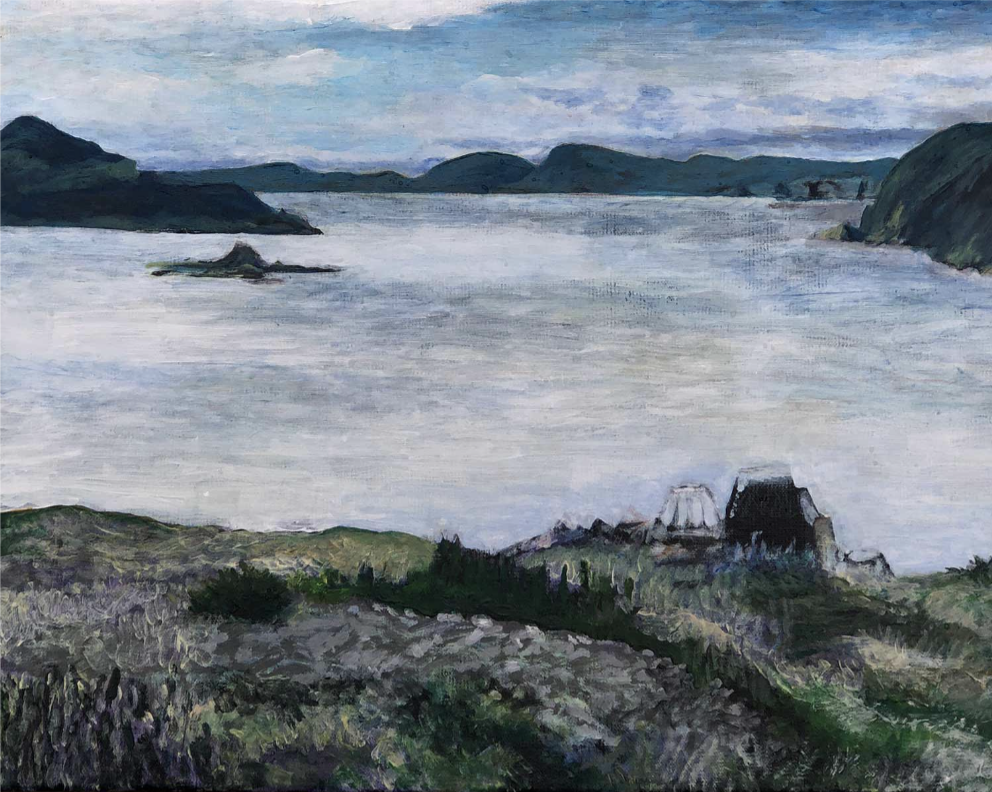
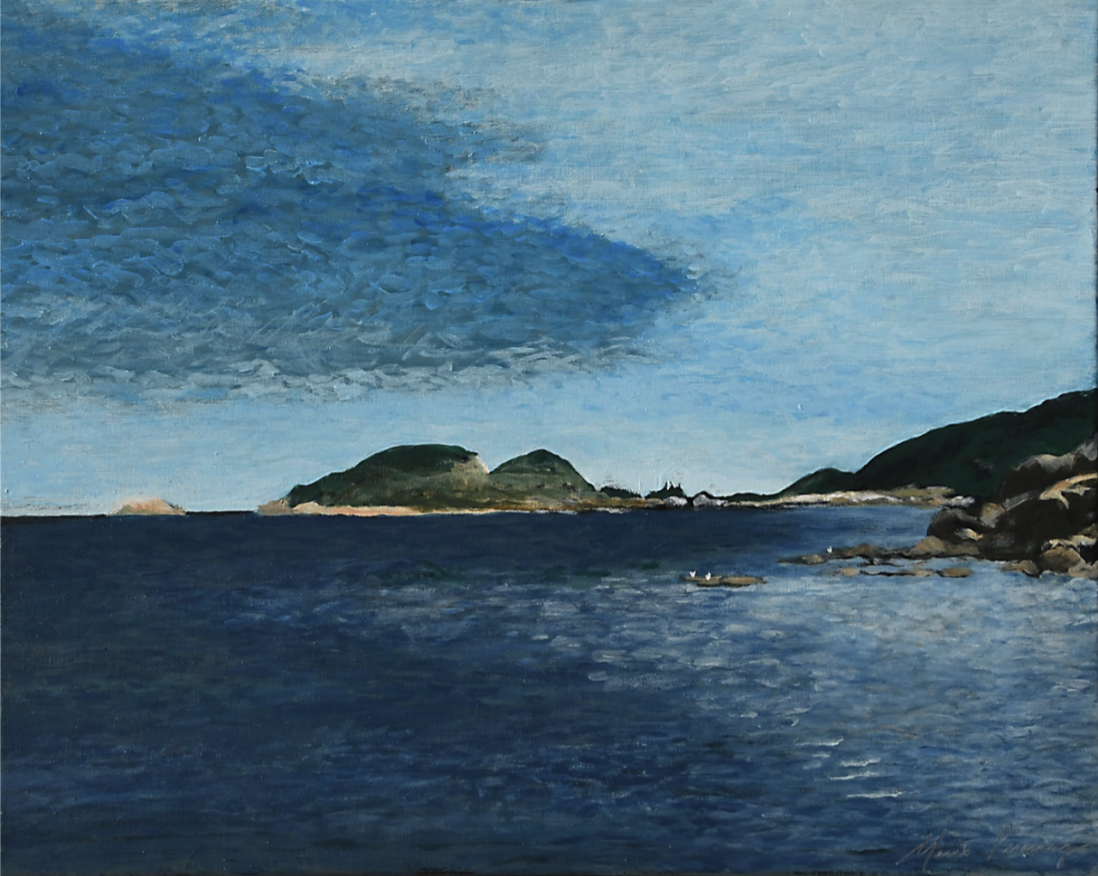
Maybe earlier, there were gulls, screaming and flying in circles, and teasing each other, but they are gone now. Maybe earlier, there were people walking on the pebbly sand and talking together, cameras in hand, but they have taken their photos and left. Maybe there were boaters, pulling a small motor craft out of the water and loading it into their pickup truck. Afterwards, maybe the gulls will come back to tease each other and fly around the shoreline again. Maybe the tide will come in or go out, and maybe more people will arrive to take photos on the beach, and leave. Maybe the boaters will return and tie their small craft back to its mooring line, then drive away down the road. But, for certain, at this moment, the August sun is bright in the vivid blue sky at the edge of the cloud deck. For certain, the warm sunlight is shimmering and flickering over the almost-calm water. For certain, there is only the sound of a slight cooling breeze over the water, making waves that slap gently on the sandy gravel and rocks. For certain, there is nobody home at the small house in the low valley across the cove. So we relax and watch Sunday morning unfold however it might. Good tourists take their time and don’t rush.
There is no such thing as timelessness. There is only slow change, nothing ever really stands still. Except today. Today the fishermen have left their gear to dry. Today the tourists have gone to take pictures somewhere else. Today the clouds are not rushing across the sky. Today the wind is light, sounds are muffled, and the water is calm. Today the muted colours merge in horizontal layers as far as you can see. Today the hills and cliffs sit in monumental peace and quiet. Today there is balance, stability and repose.
Melissa Samms
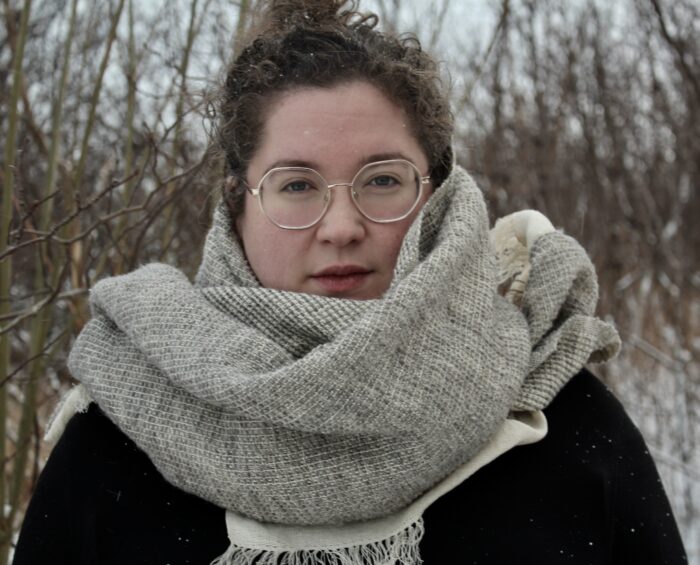
Melissa Samms is Mi’kmaw from and of Katalisk (colonially known as Codroy Valley) and of ƛ’q’əmcín (colonially known as Lytton). Liss is practical to a fault, and embroiders to mend things that they love, and creates art to show their heart to others. Their favourite stitch is currently the close herringbone stitch.
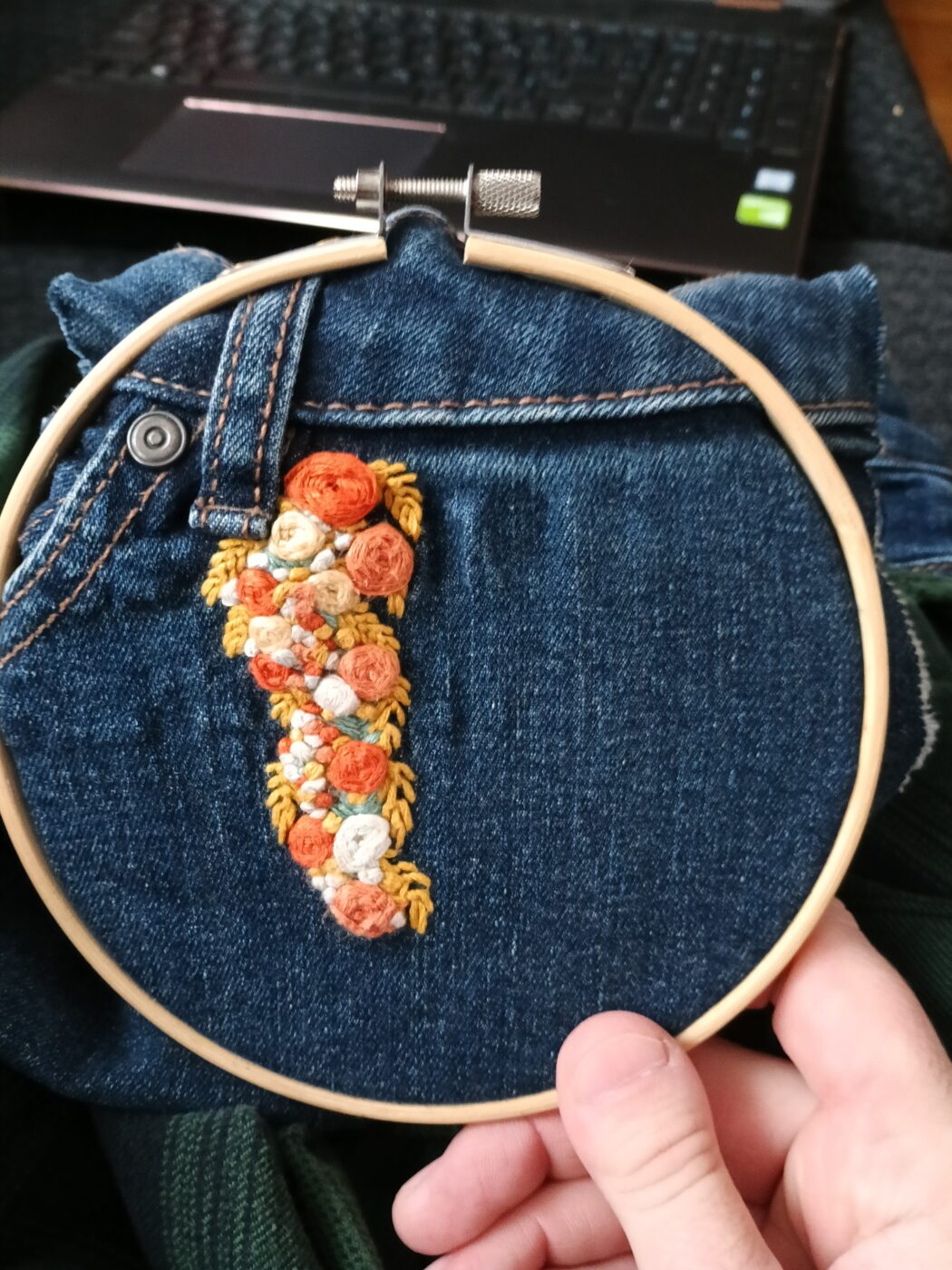
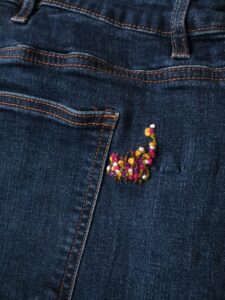
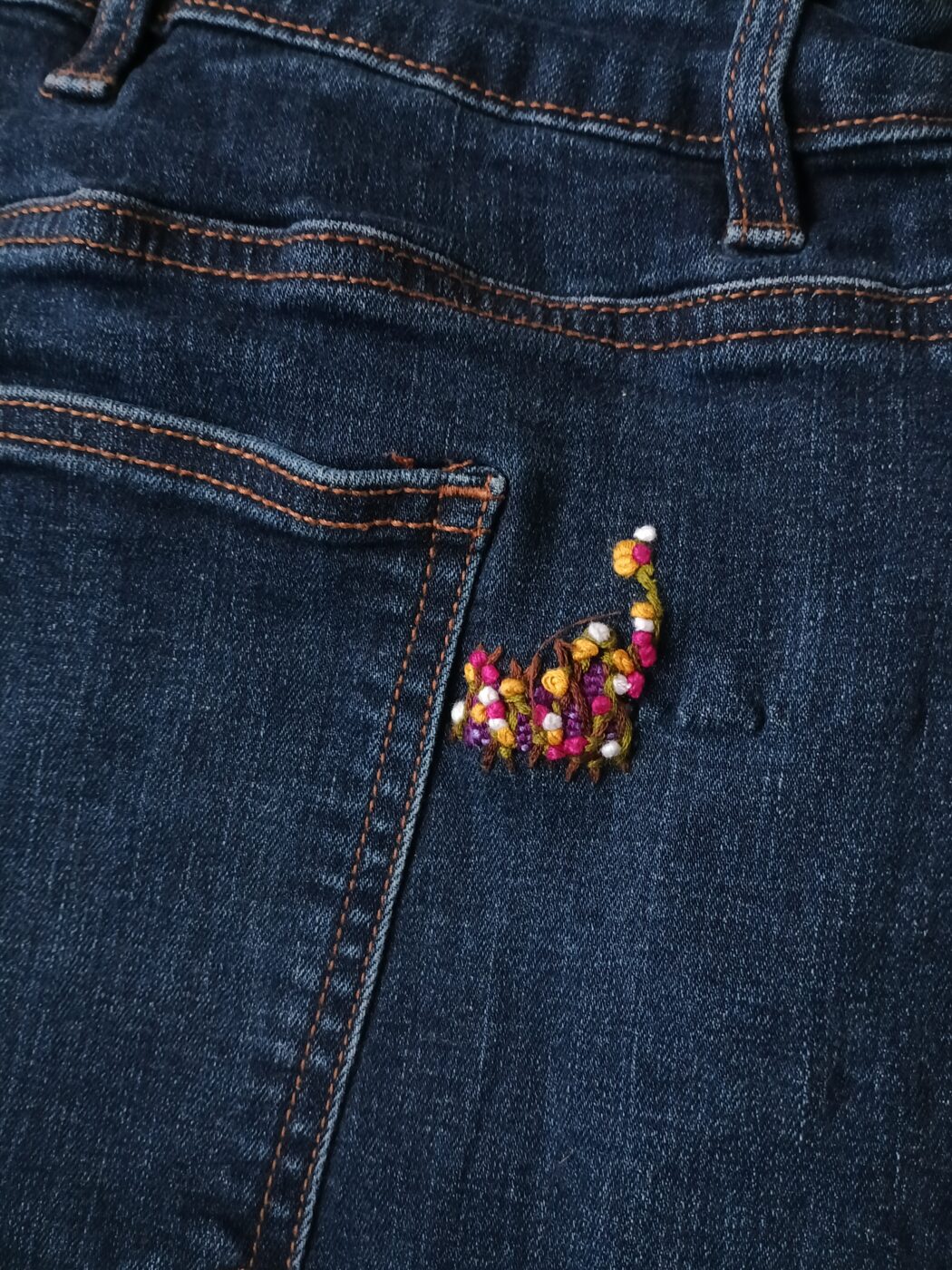
The stitches on the shirt are french knots, cretan stitch, portuguese stem stitch, and a spider web filling stitch or woven flower, and the buttonhole is repaired with a whip stitch. The patch is french knots, cretan stitch, close herringbone stitch, and a spider web filling stitch or woven flower. The jeans have a woven patch, open herringbone, french knots and freehanded stems (meant to look like a trellis of flowers on a purple wall).
People are allowed and encouraged to touch them.
These works are repairs to loved garments, a way to keep them alive longer. The shirt was repaired on 2 occasions, in 2020 when a flanker created a hole in the front, and in 2021 when the buttonhole started to wear out after practically living in the shirt for months. I used cretan stitch, woven flowers, and french knots for the first repair and I whip stitched blue thread for the second. The patch is from a pair of jeans – the belt loop tore on either side of the zipper. Clothing is made to a standard size that hardly fits anyone perfectly, so I’m always hauling them up. They started to tear, so I reinforced them with close herringbone, cretan stitch, woven flowers, and french knots. When the rest of the jeans gave out, I kept the patch that I was proud of.
Nasim Makaremi Nia
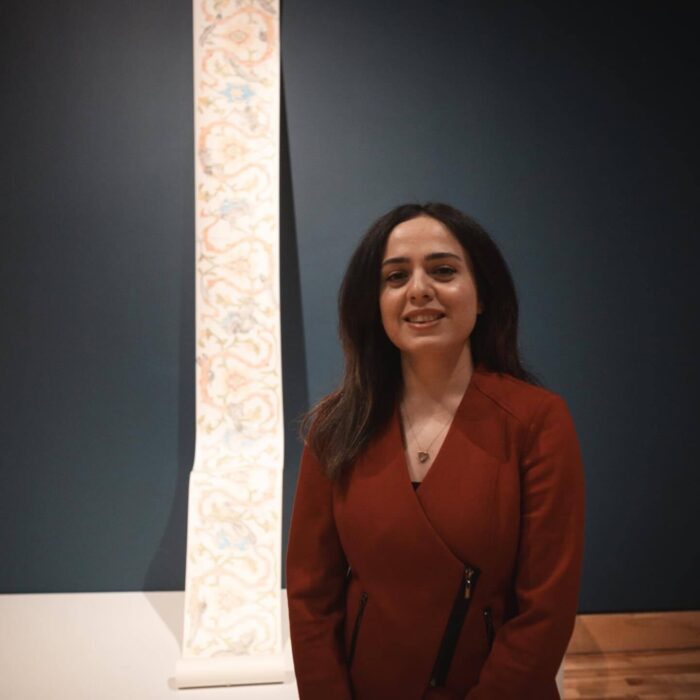
Nasim Makaremi Nia is an artist and art educator based in Newfoundland and Labrador since 2020. She is currently pursuing an interdisciplinary PhD at Memorial University. She holds an MSc in Solid-State Physics from Iran and a Master of Fine Arts (MFA) from Grenfell Campus, Memorial University of Newfoundland and Labrador.
Nikita Sachdeva
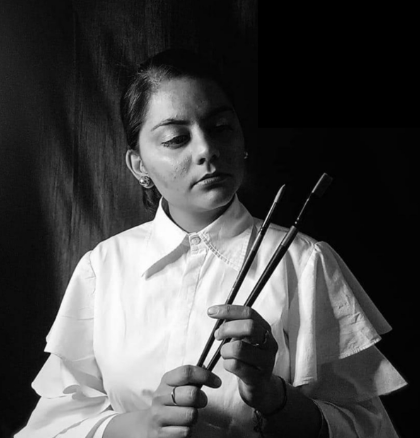
I am Nikita Sachdeva, an artist who turns challenges into passion. I started sketching at the age of three and never stopped expressing myself through watercolor and oil painting. My art is vibrant and evocative, reflecting my resilience, dedication, and creativity. I graduated from the College of Art, Punjab University, India, with a scholarship and a top position. I have exhibited my work in multiple venues across India, earning recognition and appreciation from the art community. I am also an active member of the Eastern Edge Gallery and Ice berg Gallery. and have received recognition from the Art Association of Newfoundland. I have been part of Toronto Outdoor Art Fair 2025 under Deaf culture Society.
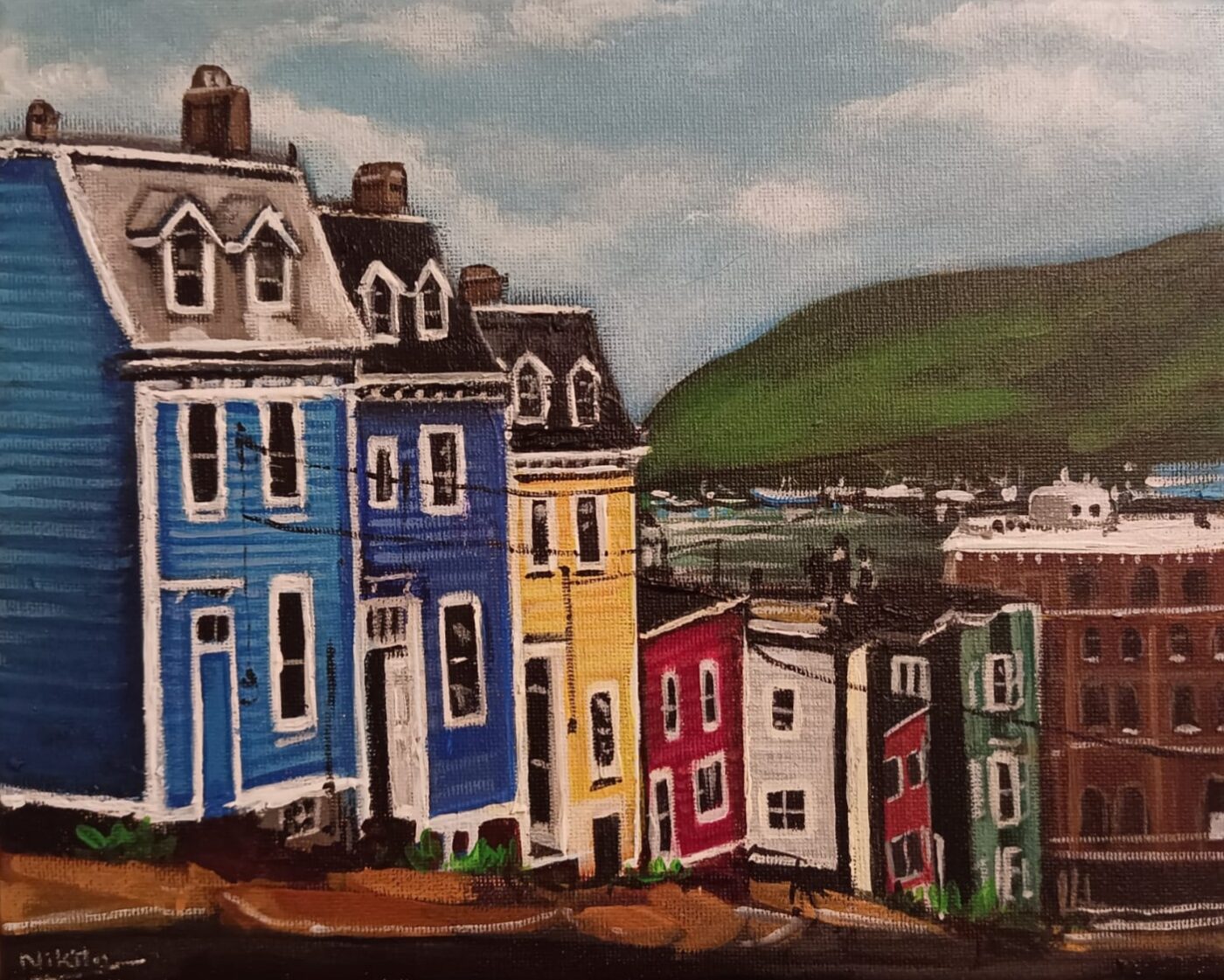
My painting reflects traditional maritime of Newfoundland with its colourful vibrant way of housing lifestyle of Newfoundland .
Pete Barrett
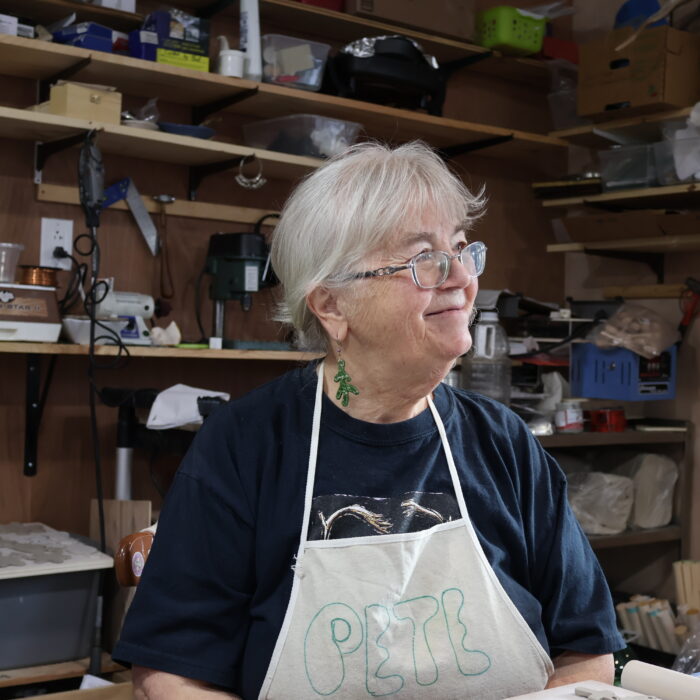
Pete (Peyton) Barrett – Artist and Consultant. She has been a Fiber Artist for over 50 years with metal arts joining her repertoire in 1995 to create visual landscapes used in wall art or jewellery. Her art is a combination of fabric, paint/dye, metals, glass, bone and clay representing her Innu/European heritage and nature. Her work has shown in several Centers for the Arts in Newfoundland and Labrador, Quilt Canada exhibit in Waterloo, Mealy Mountain Gallery, Cartwright, a selection of shops throughout the province and in private collections internationally. One of her larger fiber art pieces was purchased for the Winter Games VIP Lodge in Whistler, BC. Another large piece hangs at the College of the North Atlantic, Happy Valley-Goose Bay campus. She is currently working on a collection of work incorporating painted canvas and rug hooking/punching. She is a graduate of Memorial University of Newfoundland and Labrador in Arts and Education (majors in art, business, English and education) and holds a Small Business Counselor Certification from the Canadian Institute of Small Business Counselors Inc.
Pete taught business and craft through the college programming in the 70’s, and 2000, craft and art from her own studios since 1970 and spent 23 years as a Craft Consultant with the Government of Newfoundland and Labrador but in 2010 retired from the Government job to devote her time to her own business that is a combination of art/craft, business consulting (focusing on the tourism sector); craft tours in Cartwright.
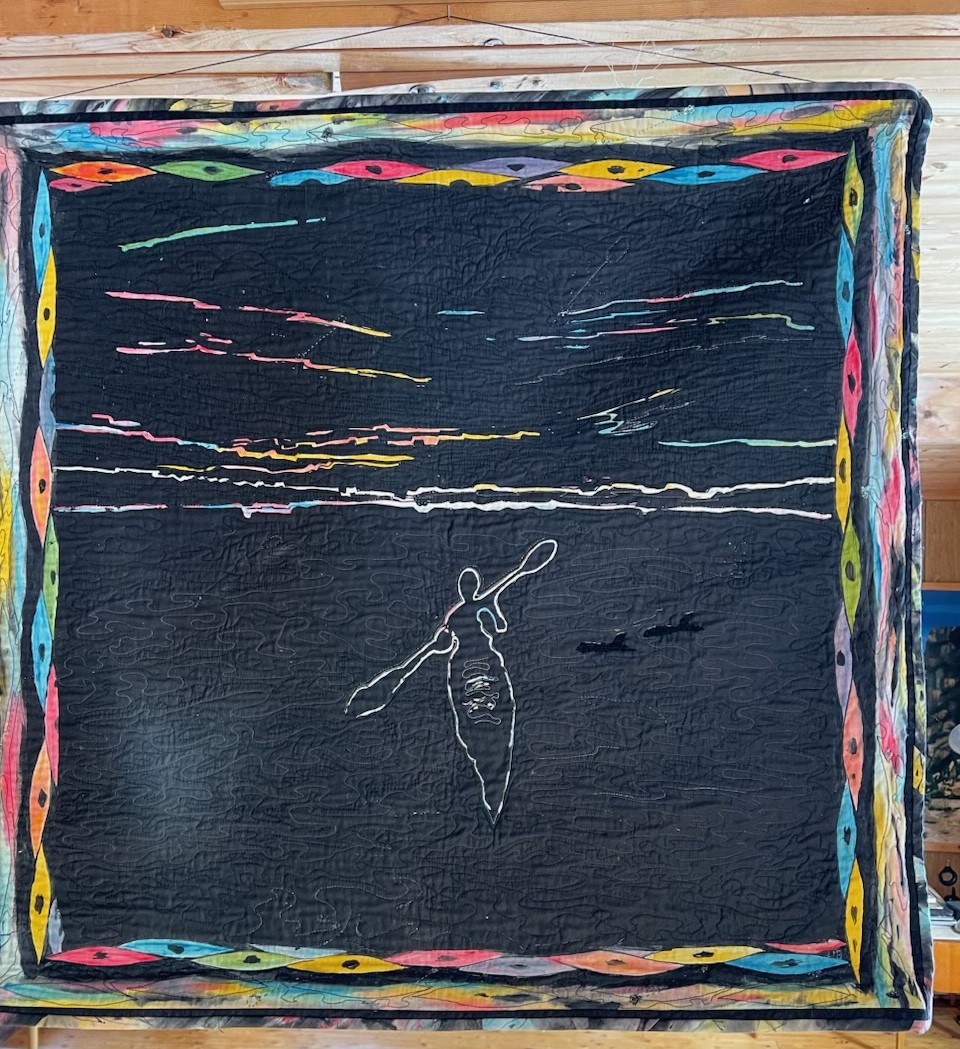
I paddled canoe since I was a teen and around 94 began kayaking. I participated in advanced training and in 2000 joined my son as an assistant kayak guide along the coast of Labrador. Kayaking in the Labrador Sea has been one of the most relaxing and fun adventures I have participated in. “Positive” represent not just the fabric but my experience on the water. This wall hanging began as a piece of white cotton. A screen was developed for the main piece of the stylized picture of me in a kayak and the black background. Each kayak was hand painted around the edge to create a border. The quilting was mainly with my domestic sewing machine and tucked in the quilting stitches you will find some embroidery of what I saw in my kayaking adventures.
Quazi M. Abrar
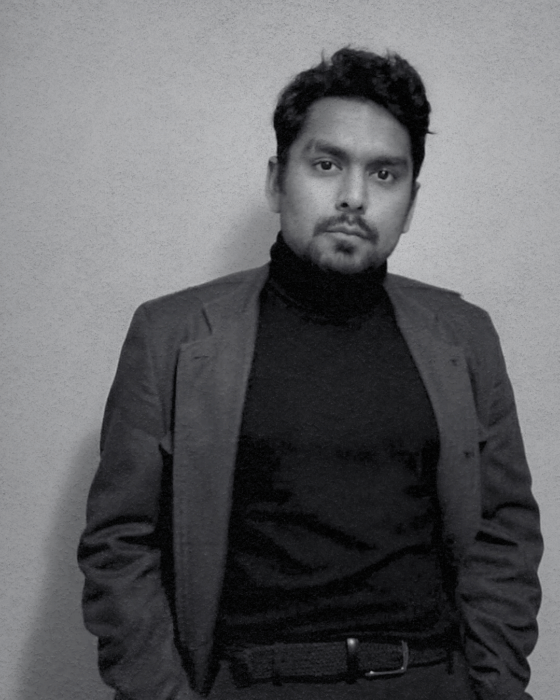
Quazi M. Abrar (He/Him) is a self-taught multidisciplinary artist whose feminist conceptual practice uses painting as a tool to challenge patriarchal norms and inherited silences. A final-year Human Biosciences major with a minor in Gender Studies at Memorial University of Newfoundland, Abrar’s work sits at the intersection of science, gender, and lived experience. He has been painting since the age of six, with conceptual storytelling remaining central to their artistic language throughout their life.
Abrar’s paintings frequently employ hues of red, symbolizing blood, flesh, and femininity, while also reclaiming red from its dominant associations with danger, warning, and unsafety for women. Through this deliberate use of color, their work confronts how fear and control are visually encoded into femininity. Working primarily with acrylic, water, and pencil sketch, Abrar balances softness with confrontation, creating works that hold space for gendered trauma, resistance, and reclamation. Their art insists on visibility, discomfort, and the radical act of reimagining womanhood beyond imposed boundaries.
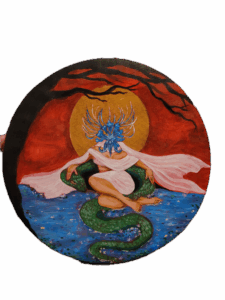
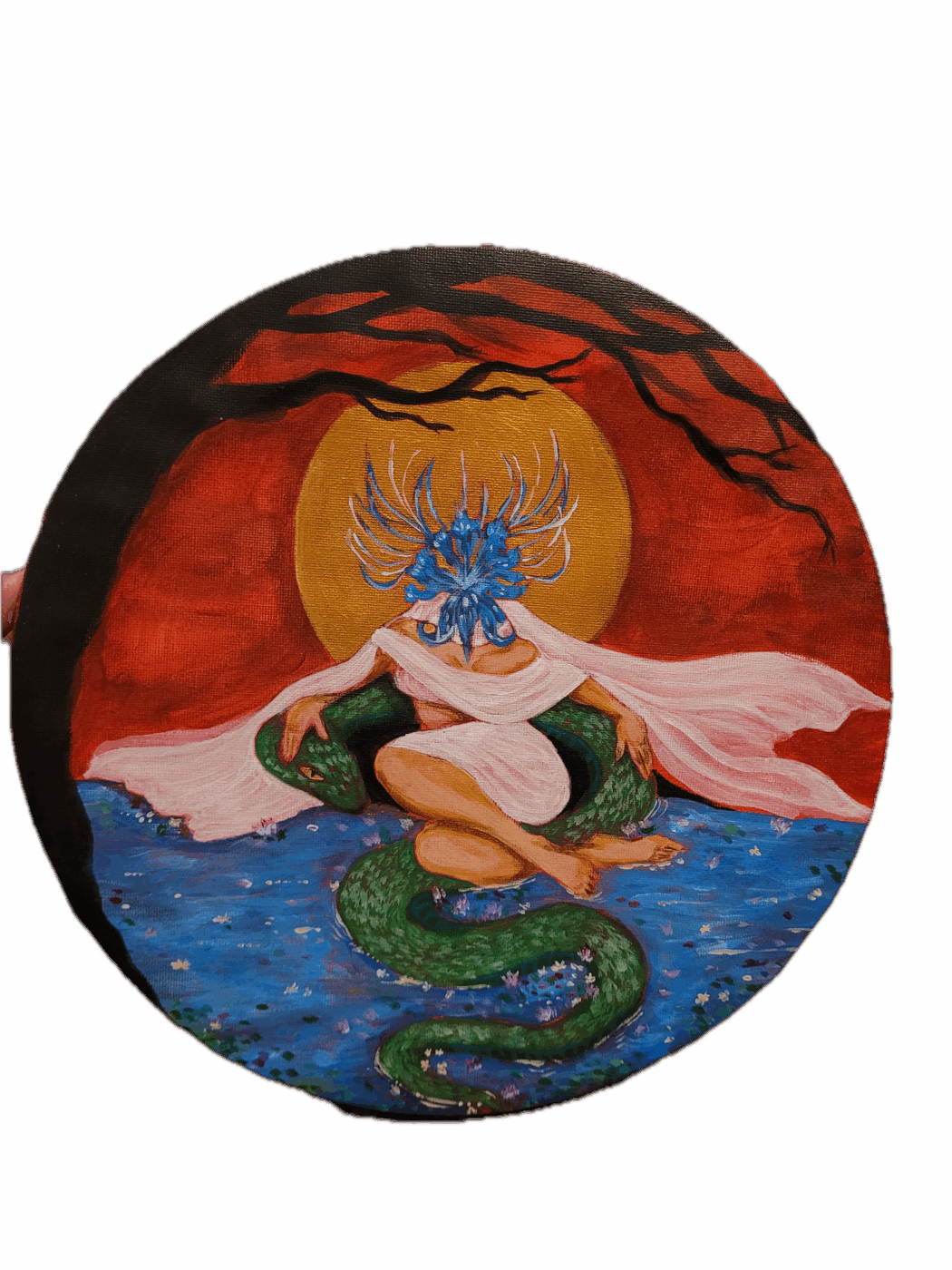
Lilith of the Forbidden Tree reclaims Lilith as the first bearer of knowledge, the first to ask why when power was withheld from her, and the first to refuse equality that required submission. When she leaves Eden, it is not exile but choice. In the eternal abyss, the serpent does not tempt her; it recognizes her, curving into throne and guardian. This work draws a connection between Lilith and the forbidden fruit itself: after the fruit is eaten, humanity begins to ask “why”, a question Lilith had already embodied. She is not the consequence of knowledge; she is its origin.
Her head blooms as a rare blue spider lily, symbolizing forbidden knowledge, dangerous longing, death entwined with rebirth. Draped in stitchless silk, her body exists without shame or apology, uninterrupted and whole. Beneath the blood moon, she floats above water, unclaimed by gravity, punishment, or surrender. Lilith is not meant to be consumed or redeemed. She is the question that could never stay in Eden.
Regan Edmunds

Regan Edmunds is an emerging visual artist from and based in Happy Valley–Goose Bay, Labrador. Largely self taught, her practice spans painting, mural work, and community engaged projects. Her work explores connection, care, and place, often drawing from everyday experiences and local stories. Alongside her home practice, Regan actively facilitates paint nights and collaborative art sessions, using art as a tool for accessibility, inclusion, and shared experience.
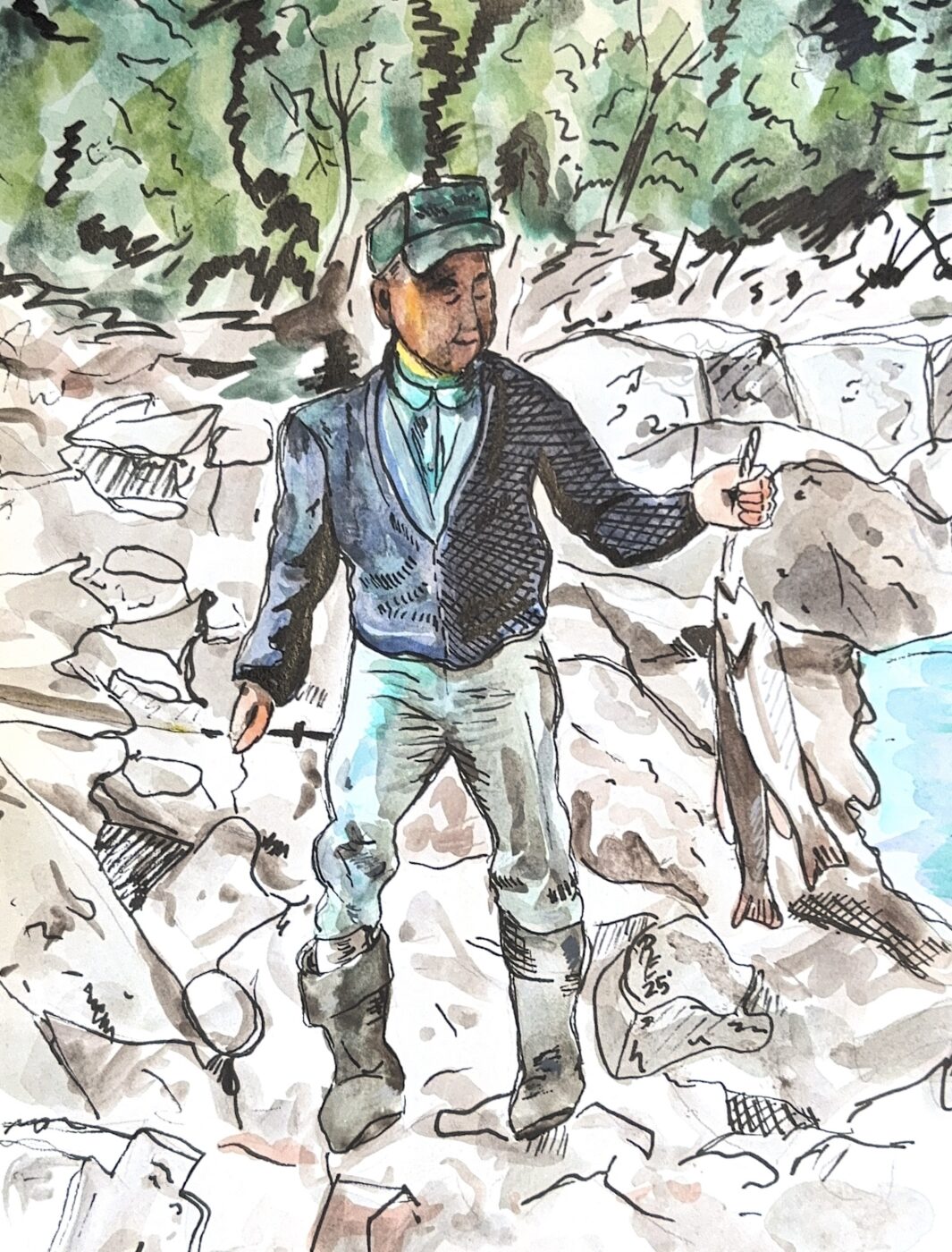
The painting in this exhibition depicts my great-grandfather standing on uneven rocky riverbanks, holding fish he has just caught on a line. The unstable ground beneath him reflects both the physical challenge of life on the land and the steady resilience required to navigate it. Loose watercolour washes and ink lines bring movement to the surrounding forest and flowing water, while the figure
remains grounded and composed. Through this piece, I honour my family history and the generations whose lives were shaped by nature, skill, and survival.
Shania Sanderson
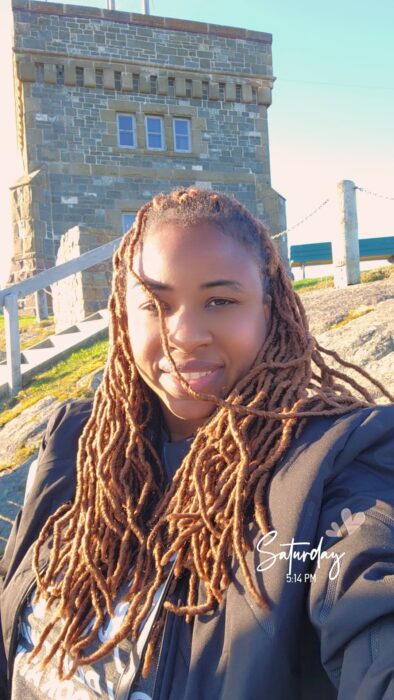
Shania Sanderson is a young driven Caribbean Artist who is passionate about mixing colors and allowing the art to formulate itself, while exploring the possibilities of providing memorable pieces through mixed media technique.
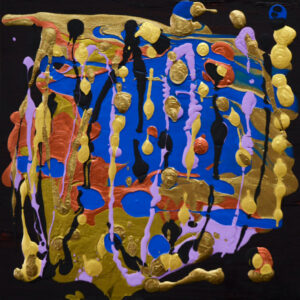
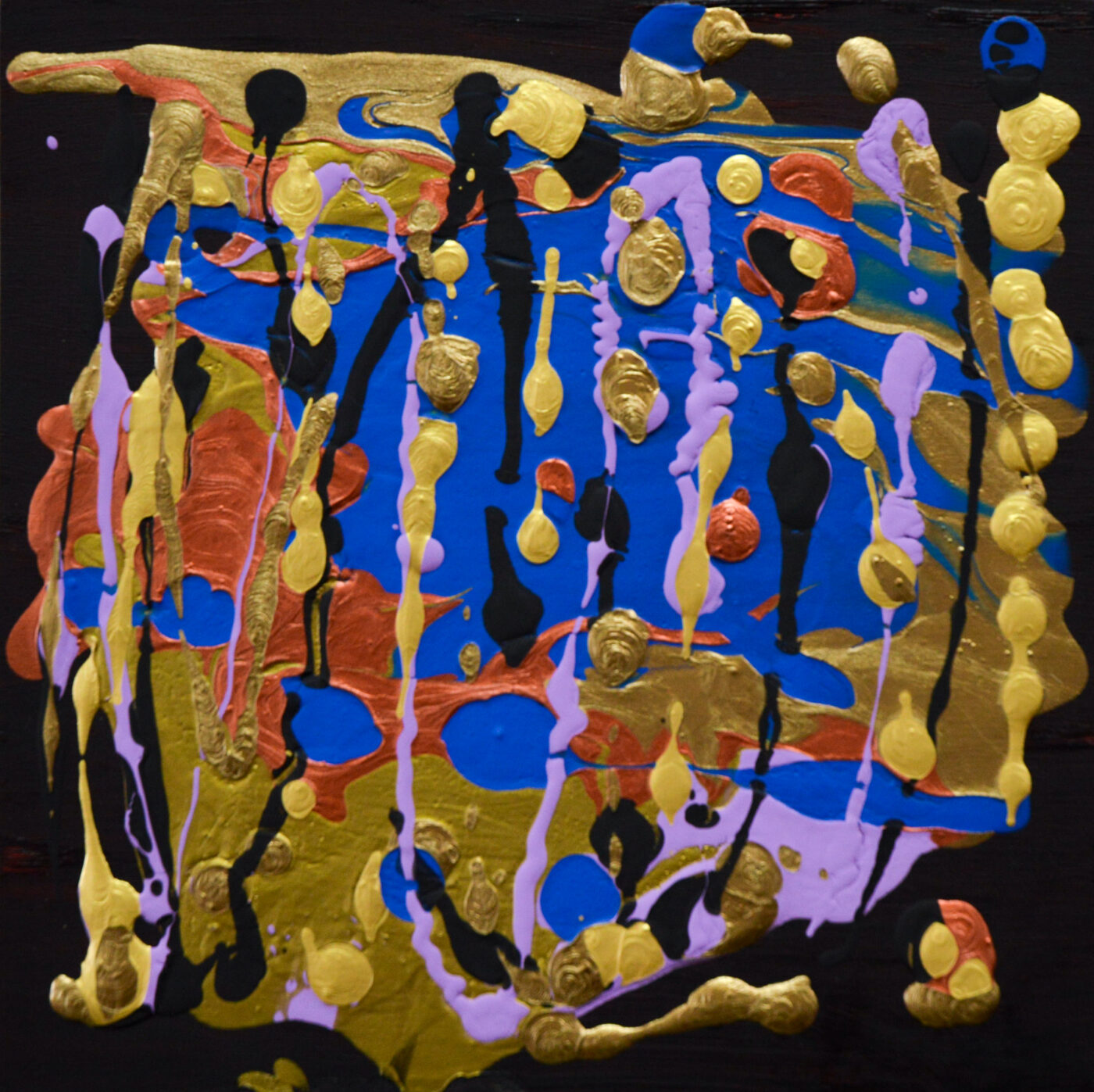
African Fabric on Canvas breathes with memory and emotion, unfolding like cloth soaked in history and spirit. Bold rivers of blue pulse across the surface, carrying echoes of water, sky, and ancestral pathways. Gold rises thick and luminous, textured like sacred adornment, whispering of royalty, ritual, and inherited strength. Each raised mark feels intentional, an offering, a remembrance, a prayer pressed into paint.
Lavender, black, and earthen copper drip and merge as though guided by time itself, mirroring the way fabric absorbs dye and stories absorb generations. There is movement here, but also grounding, a balance between freedom and structure, chaos and tradition. The canvas becomes a living textile, stitched not with thread but with emotion.
This work is not simply seen; it is felt. It honors African identity as resilient, fluid, and enduring, woven from pain and pride, loss and beauty, transformed into a contemporary abstract language that speaks directly to the soul.
Tooktoshina Creations
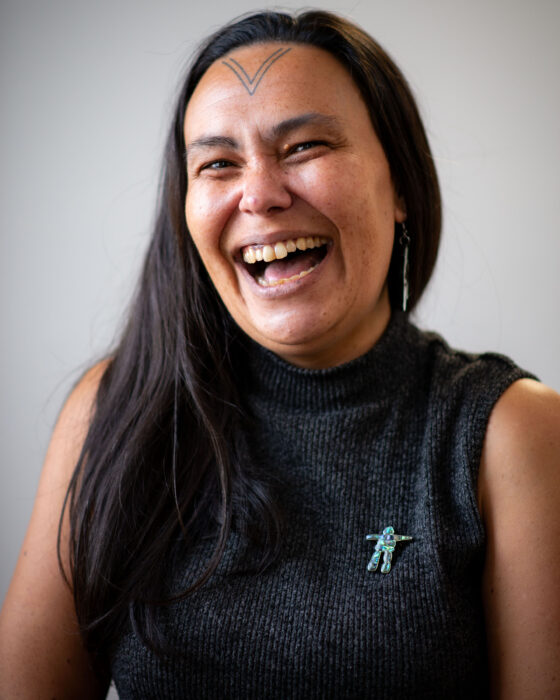
Stephanie Brant is a multidisciplinary Inuit artist with roots in Nain and Upper Lake/Melville, Labrador. She specializes in hand-dyed textiles, and traditional Inuit craft, and metalwork using a unique combination of traditional and contemporary media. She is currently working in the St. John’s Metro Area, where she is inspired by community, tradition, and a deep desire to stay connected to her culture, as well as promote and celebrate it for future generations of Inuit in our province.
Stephanie has been featured at “AtaKatigejut” (Intertwined) art exhibition alongside Billy Gauthier, and prides in making custom garments for her fellow urban-Indigenous kin, as well as taking part in various community craft markets. She was excited this year to be invited to participate in Nunatsiavut’s 2025 Christmas Craft Auction. She was recently featured in an Anti-Racism Art champaign. Stephanie Brant has relentless enthusiasm for supporting her fellow artists, women, families, and is a strong advocate for how art can tell stories, connect, and promote healing in our communities.
Inuit women in Canada encounter racism through systemic, institutionalized, and interpersonal discrimination, rooted in a colonial history that devalues their lives and culture. This discrimination manifests across multiple facets of life, including healthcare, policing, the workplace, and housing, often resulting in "double-burden" experiences of being marginalized due to both their race and gender.
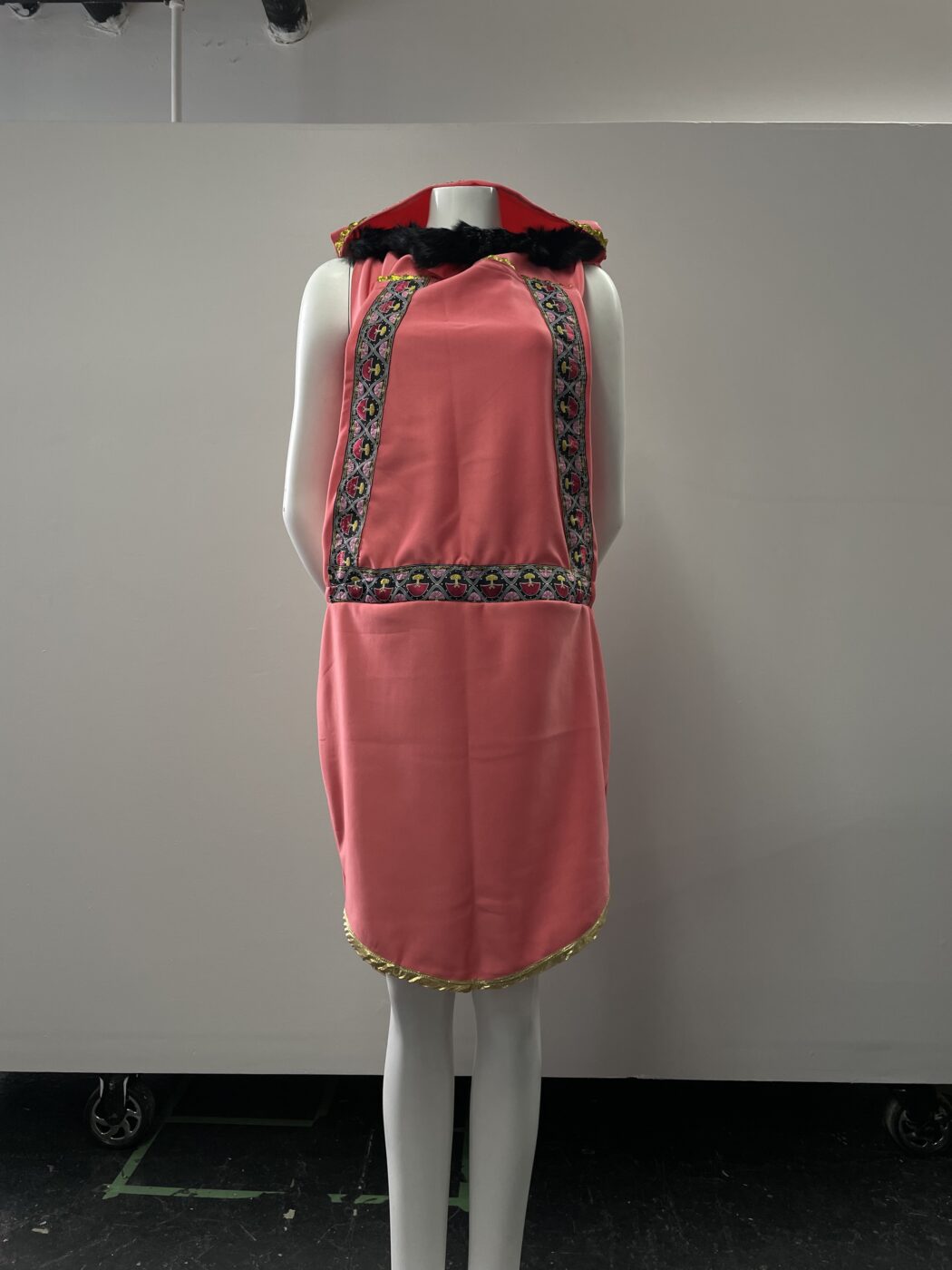
The Miriam Annugâk is a modern contemporary garment.The Miriam Annugâk incorporates traditional Inuit design woven into a modern fashion. While hoods are rarely associated with high elegance, this design transforms functional Inuit elements into a sophisticated statement. The pouch style front is also an Inuit design. This is often seen on Inuk women on their outdoor garments. This originated from functionality needs & adornment desires. There is a ulu pattern on the pouch. The ulu was traditionally owned by women and were generational pieces passed down through families.
Mrs.Brant chose the ulu pattern & the color pink to represent Inuk Women; to display their strength & resilience . Despite the endless restrictions imposed on them Inuk Women are still here crafting functionality into elegance. Holding their traditions tightly to ensure perseverance.
The term Annugâk Isa Nunatsiavut dialect for Dress. The name Miriam comes from an instrumental figure in Mrs.Brant’s early life; Miriam Brown. Given this is what Mrs.Brants hopes to be her early part of her Artistry career she thought it be fitting to name the piece in honor of Miriam to represent the early years.
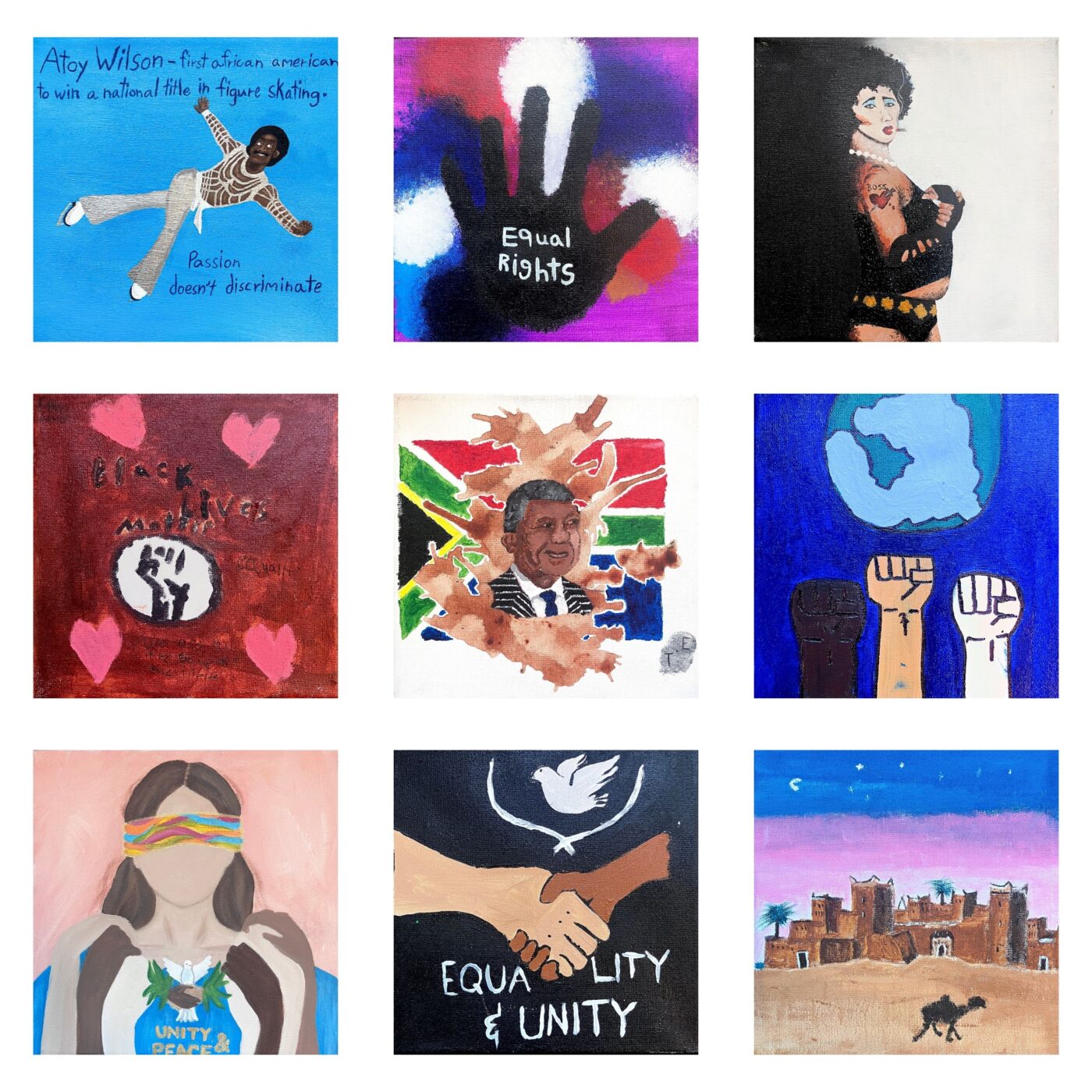
Holy Heart Youth Arts for Equity Initiative
“The Heart of Equity and Anti-Racism” Project
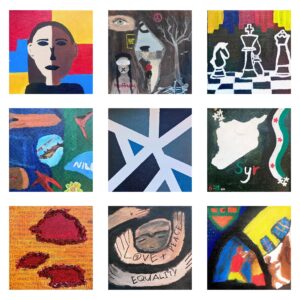
This initiative is an extension of the Arts for Equity project and brings together students from art programs, providing space to reflect on identity, belonging and their lived experiences in Newfoundland and Labrador. With support from teacher Meleny Yetman-Holloway, Eastern Edge facilitators and project partner YWCA, youth of all racial and cultural backgrounds are presented with artists and artwork that has worked as tools for change. They were encouraged to ask meaningful questions, envision positive change and express their ideas through a painting project that fit neatly within the grade 12 art curriculum. Students were supported with materials and guidance to create artworks that speak to community care, representation and justice.
